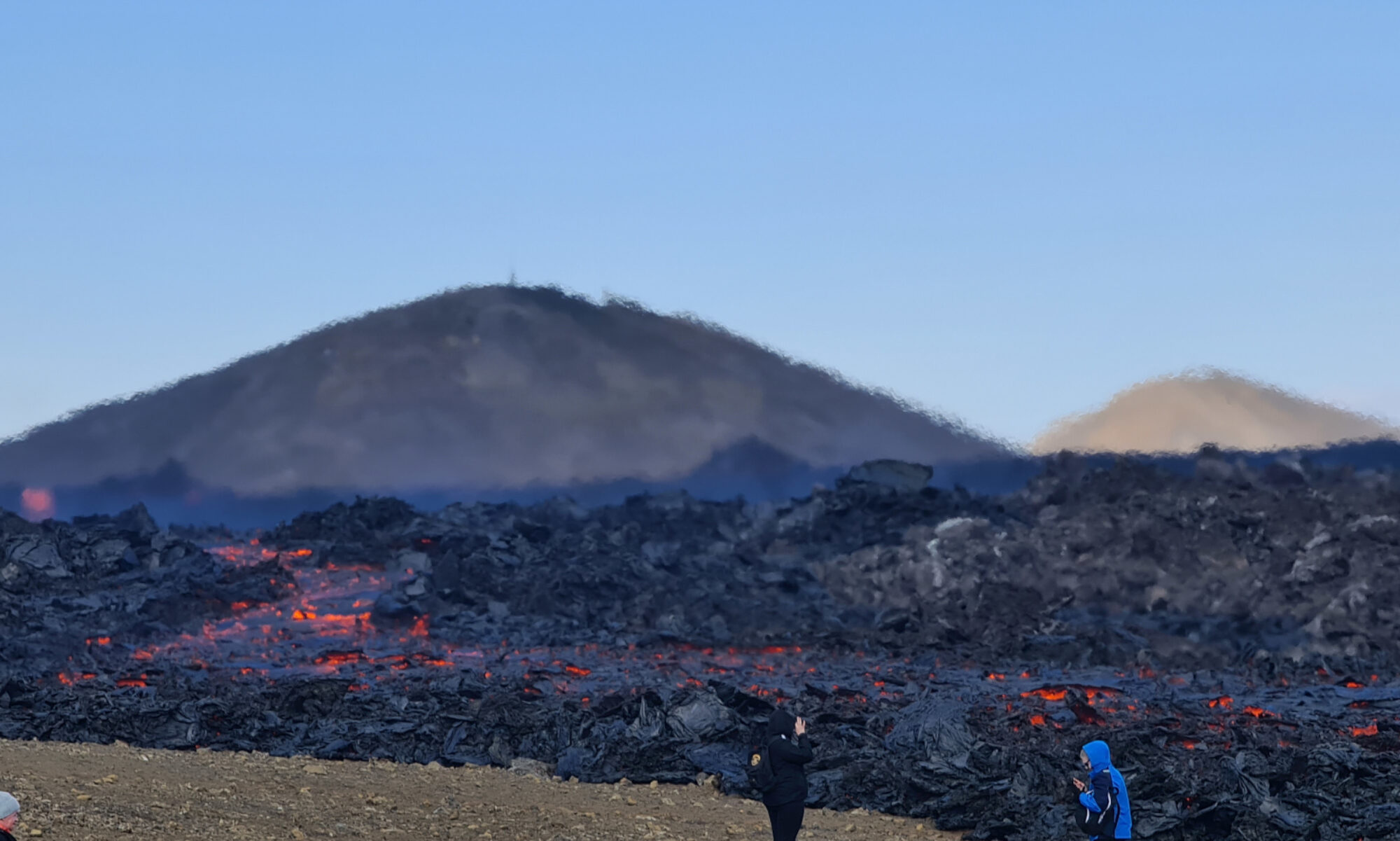
Grímsfjall/Grímsvötn volcano eruption update at 21:54 UTC

This is a minor update to the Grímsfjall volcano / Grímsvötn eruption.

Process of the eruption: The harmonic tremor on the SIL stations around Grímsvötn is increasing again after it did drop a little bit down earlier today. Following this the ash plume has again appeared on radar images from Icelandic Met Office. Currently however the ash plume is just around 10 km high. According to the news, the eruption is made out of basalt. But that is a common eruption type for Grímsvötn. The ash cloud is formed when hot magma gets into contact with ice and water and explodes on contact. This eruption is now expected to many times larger then the eruption in Eyjafjallajökull volcano last year.

Ash cloud: The ash cloud does now covers most of Iceland, except the northern part of west Iceland (for the moment) and east Iceland (for the moment) but that is expected to change in the next 24 to 48 hours. Ash has been reported in most town in Iceland. That includes Reykjavík, Akureyri, Selfoss (heavy ash cloud) and more. According to web cameras there is heavy ash fall close to Hekla volcano from Grímsfjall volcano (web camera pointed towards Hekla is here, Eyjafjallajökull is here). Due the ash cloud all flight to and from Iceland has been grounded until this ash clouds goes away.

Earthquakes: Few earthquakes are recorded. But only two earthquakes have been recorded around Grímsfjall volcano and close to in the past few hours. But that does not mean that they are not happening. But they might simply be lost in the harmonic tremors from the eruption.

Other: Nothing at the moment.

Please note that information here might get outdated really fast and with no warning at all!
Interesting earthquakes 20 km WSW of Laki in Eldgjá volcano canyon (Katla volcano fissure system)

There are interesting earthquakes about 20 km WSW of Laki. The locations of the earthquakes suggests strongly that they belong to Katla volcano fissure system. Last eruption in this area took place around the year 934. When the Eldgjá volcano canyon was formed. That eruption did destroy a older volcano canyon located in this same area (lava flows volcano ash did fill up that canyon far as I know).

The earthquakes that have been taking place in this area are small. The largest so far has the automatic size of ML1.2, but only ~4 earthquakes have been recorded so far. But what is most interesting about this earthquakes is the depth. The earthquakes that has the best automatic detection by the SIL system has the depth of 0.7 km. But that makes the depth of ~700 meters and that is a shallow earthquake. Given that this area has only fissures and no activate volcanoes. It is not unheard of in Iceland that a fissure eruption to start with no warning at all. Last time this did happen was in Gjálp eruption in the year 1996. Before that a dike intrusion into the bedrock did manage to get to the surface in Askja eruption in the year 1878, when a 25 km long volcano fissure did open up (small compared to Eldgjá eruption around the year 920).

I do not know what is going on in this area at the moment. As the activity so far has been too small to make any clear picture of it. But Katla volcano is a big volcano and it is not out of volcano league to make a new fissure eruption instead of the regular caldera eruptions under the glacier as Icelanders have gotten used to over the past 1000 years or so. Last time this did happen there are suggestions that there was a also a eruption at the same time in Katla volcano caldera. But that this has only been revealed during research over the past 50 years or so in this area.

I have also noted that there is a small increase in earthquakes inside Katla volcano caldera, not far from Austmannsbunga. But at this moment it is too early too know what it means for sure. There is no eruption is imminent in Katla volcano when this is written. Just too be clear on that fact.

Changes in Grímsfjall volcano

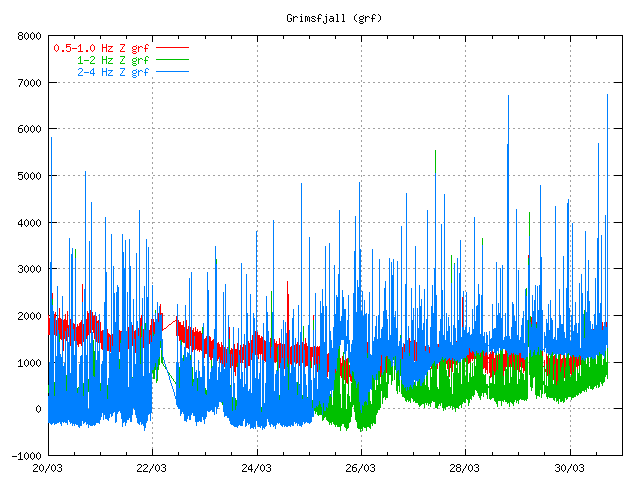
Few days ago changes started to happen in Grímsfjall volcano. It is hard to describe this changes. But they appears to be changes in harmonic tremor levels in Grímsfjall volcano. But they appears to be above background levels and the reason why that is a bit unclear at the moment, but I do not think that this is ice movement as I did think it was first. As this has been lasting for too long. Following this has been a slow increase in earthquakes in and around Grímsfjall volcano. This earthquakes don’t appear on the automatic SIL system, even if they are up to ML2.0 in size. This suggest that there origin is from magma movements, not tectonics one (tectonics earthquakes also happen there).

So far nothing suggest that a eruption is immanent. But that can change without any warning. As Grímsfjall volcano is known to start a eruption with no warning at all.


Harmonic tremor levels in Grímsfjall volcano on 30th March 2011. Picture is from around 17:30 UTC. Copyright of this picture belongs to Icelandic Met Office. The picture is from there web site.


Earthquakes in Grímsfjall volcano on 30th March 2011. Picture is from 17:30 UTC. Copyright of this picture belongs to Icelandic Met Office. The picture is from there web site.

All that can be done for now is to wait and see what happens. But my opinion is that something is up in Grímsfjall volcano. But what that is remains unclear at the moment.