Strong earthquake in Japan, small earthquake swarm on Reykjanes Ridge in Iceland and more

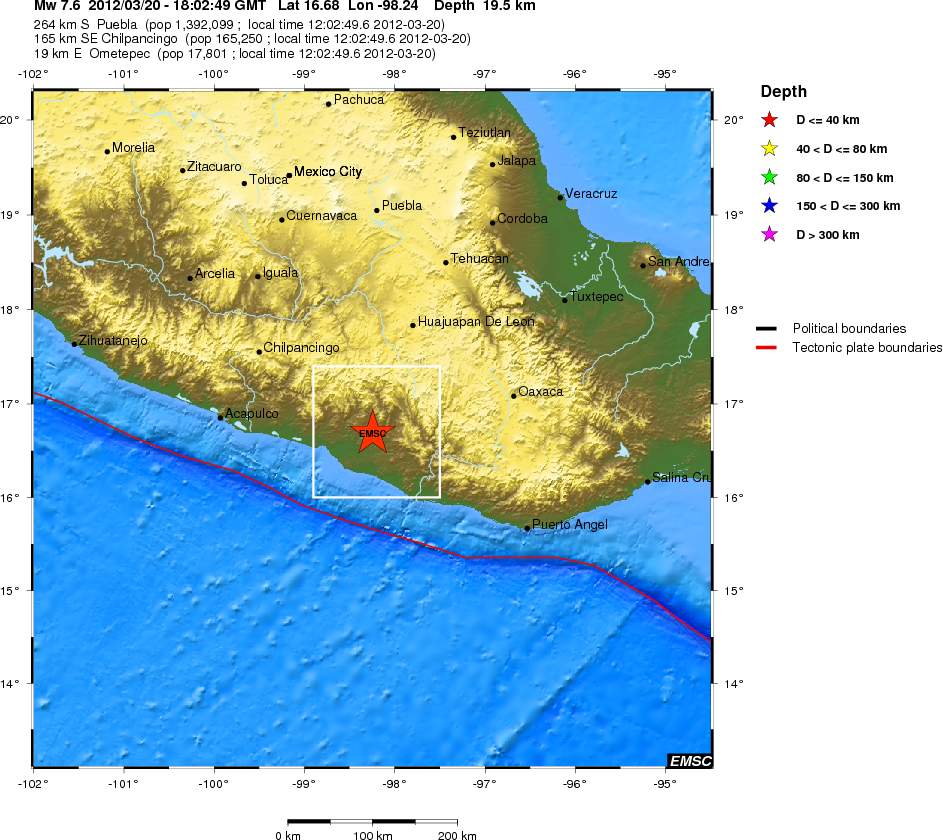
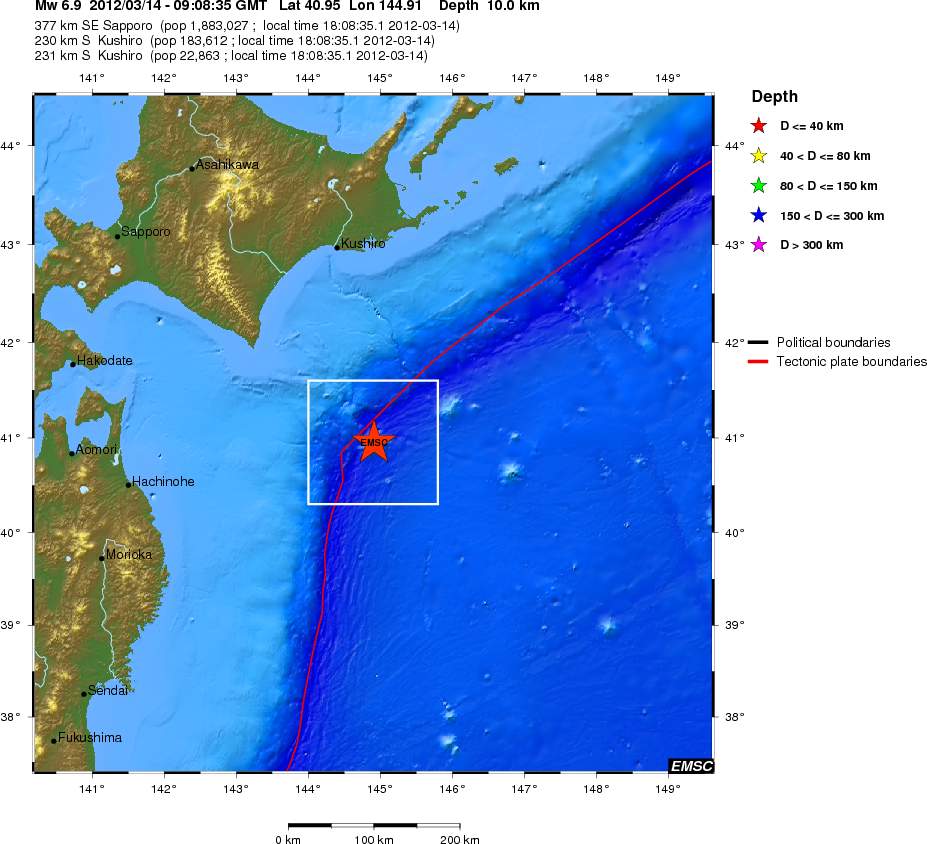
Yesterday (14.03.2012) at 09:08 UTC there was an strong earthquake in Japan. The size of this earthquake was Mw6.9 and it had the depth of 10 km. Local tsunami warning was given out for the area closest to the epicenter of the earthquake. Aftershock activity has been ongoing after the main earthquake. The largest aftershock so far had the size Mw6.0. More details on the earthquake in Japan can be found here at EMSC web page.


Regional view of the earthquake in Japan yesterday morning. Copyright of this image belongs to EMSC.


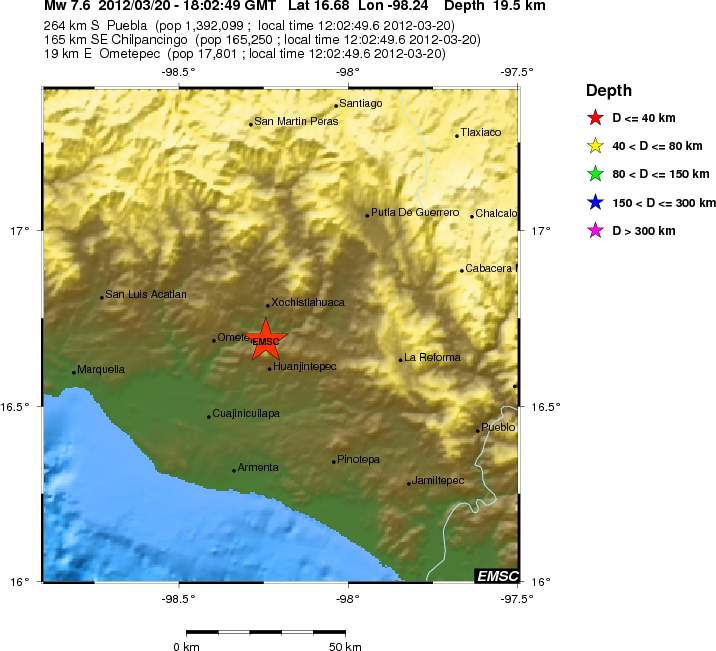
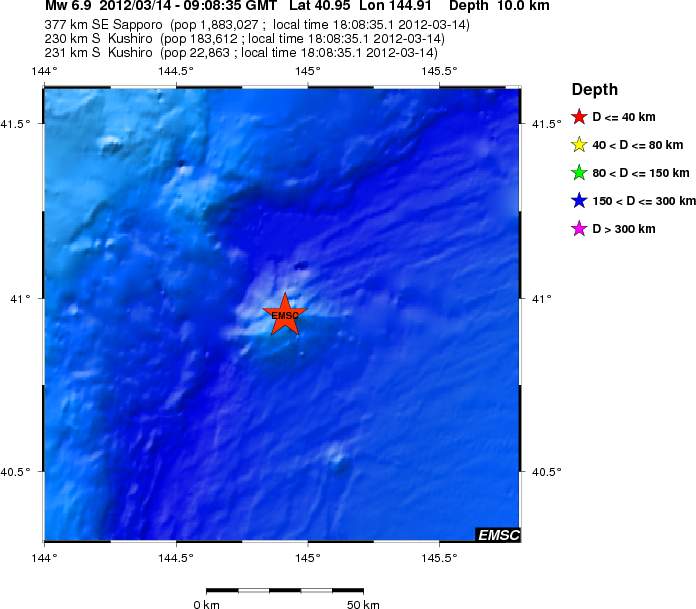
Local view of this earthquake. It appears to have been in an subduction mountain, or close to it. Copyright of this image belongs to EMSC.

Iceland

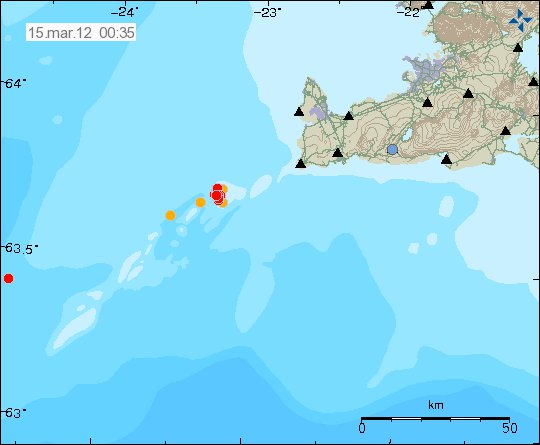
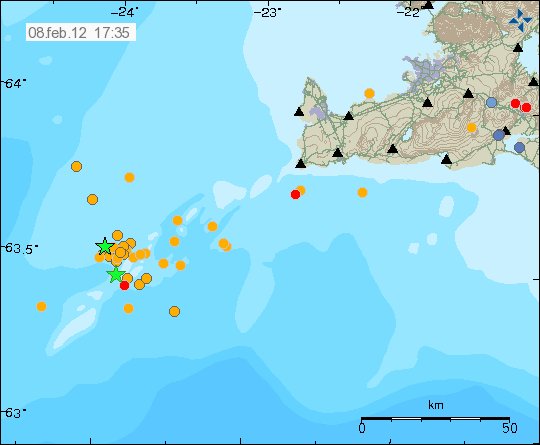
Currently there is an earthquake swarm ongoing on the Reykjanes Ridge off the coast of Iceland. So far the strongest earthquake has reached the size of ML2.7. The depth is about 7 – 16 km. There is an slight chance that his might be an dike intrusion taking place on the Reykjanes Ridge. But this also might just be normal fault movement in the area. For the moment. There is no way to know for sure exactly why this earthquake swarm is taking place.


Reykjanes Ridge earthquake swarm as it is at 00:35 UTC. Copyright of this image belongs to Iceland Met Office.

South Norway

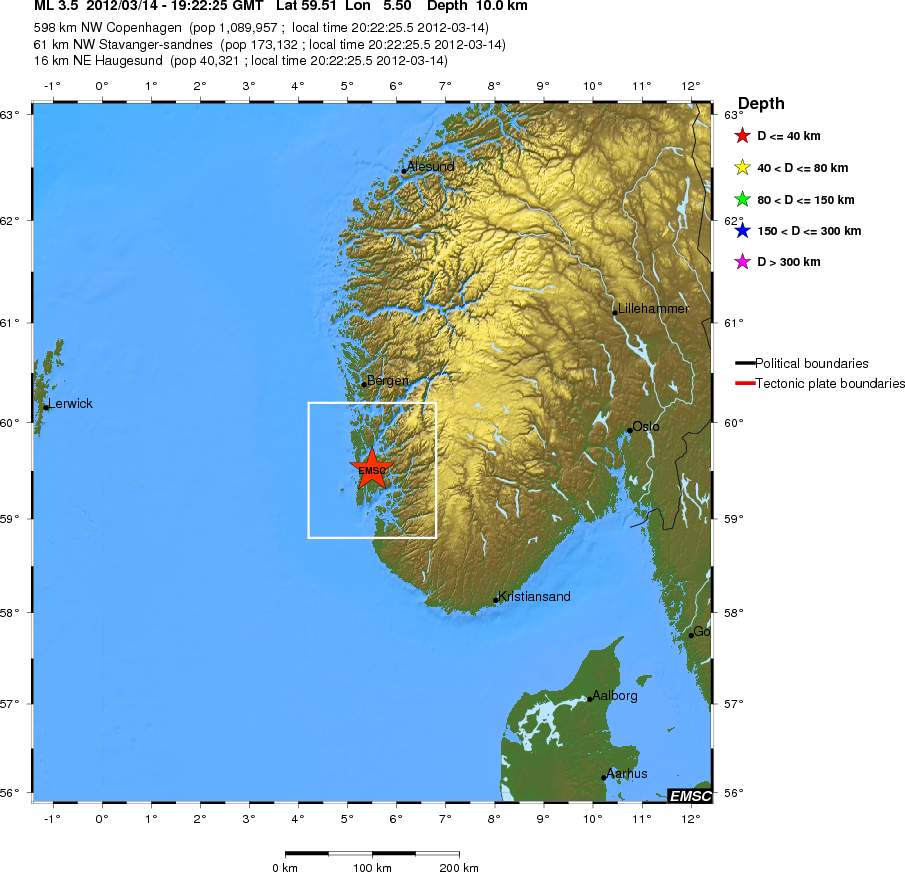
An minor earthquake took place in south Norway at 19:22 UTC. The size of this earthquake was ML3.5 according to EMSC. With the depth of 10 km. This earthquake was clearly felt in Norway according to EMSC and news reports of this earthquake. More details on this earthquake can be found here, on EMSC web page.

The regional view of the earthquake in south Norway. Copyright of this image belongs to EMSC.


Local view of the earthquake. It can clearly be seen here how close it was to several towns in south Norway. Copyright of this image belongs to EMSC.

This earthquake was clearly felt in Norway due the old crust that it took place it. But older crust conducts earthquakes better then new crust. Like the one that can be found in Iceland. That is due to lack of faults in it and the fact it is more dense with sediments then new crust. Earthquake in this area should be expected every 5 to 20 years or so. As there are old fault lines in this area, they sometimes break and create a earthquake.

Norwegian news about this earthquake.

Kanskje noen glass har falt ned fra bordet
Jordskjelv i Rogaland i kveld

New Britain region

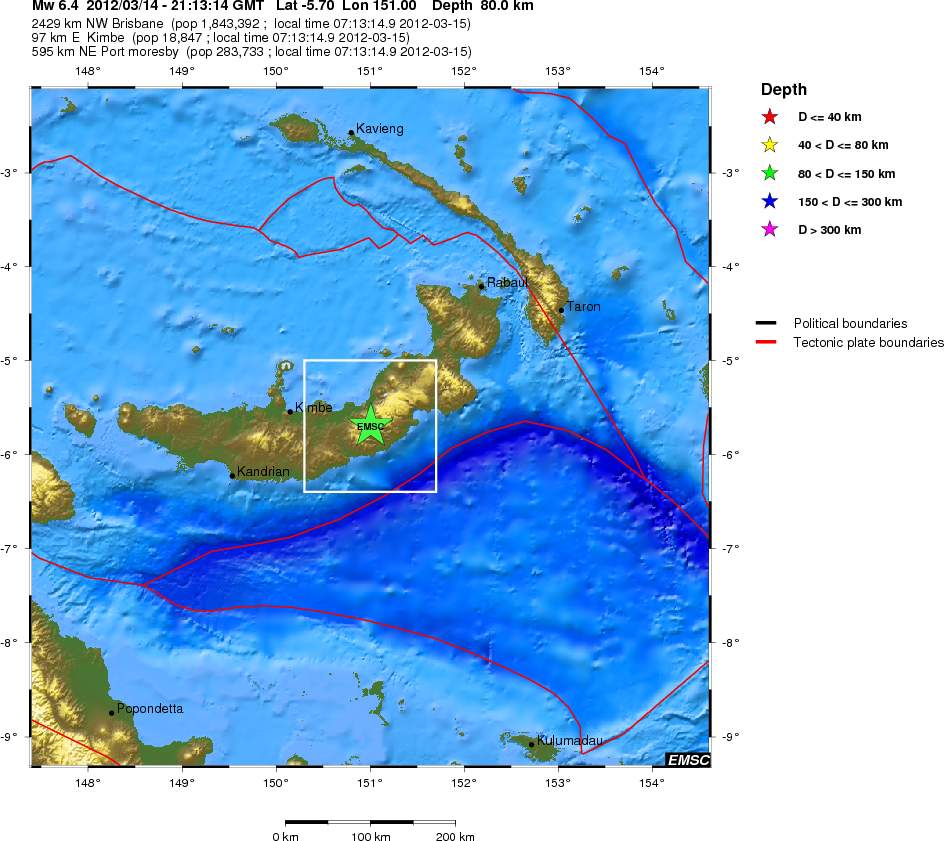
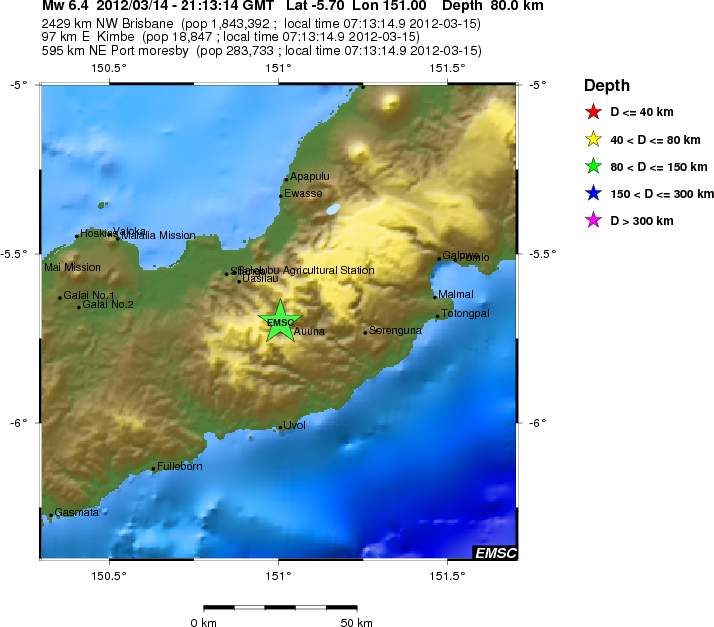
Today at 21:13 UTC there was an Mw6.4 earthquake in New Britain region. The depth of this earthquake was 80 km according to EMSC. I do not know if this earthquake was felt or not. It at least has not been reported yet.


Regional view of the earthquake from EMSC. Copyright of this image belongs to EMSC.


Local view of the earthquake from ESMC. Copyright of this image belongs to EMSC.

More information about this earthquake can be found here, on EMSC web page.

Other

I am sorry for late post. I was flying back to Iceland today. It took awhile. I also had to do other things this evening before I could write about the most recent activity yesterday. This is going also going to happen later when I move back to Denmark. But I am going to post more details on that later.

Blog post updated at 12:11 UTC on 15.03.2012. Location of the earthquake in Norway was fixed.

Earthquakes in north and south Iceland [Updated]

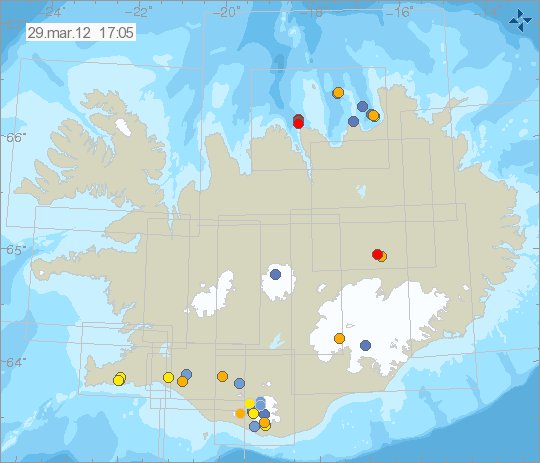
This evening has been busy in Iceland. There was an ML3.5 earthquake just outside an area called Gjögurtá (part of TFZ). Followed by an ML3.2 aftershock. Earthquake activity seems to have stopped there for the moment. This took place at 22:06 UTC on 29.02.2012. The largest earthquake was felt over an large area that was closest to its location.


The location of the earthquake in the TFZ. Copyright of this picture belongs to IMO.

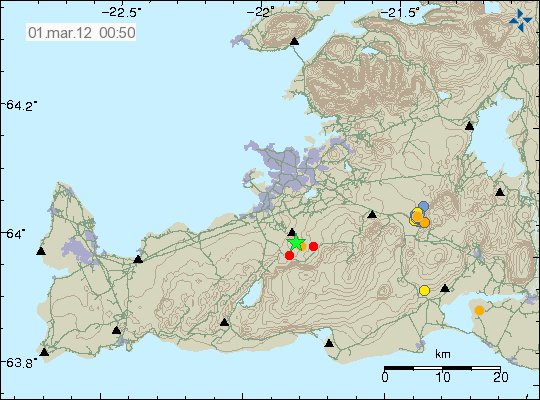
At 00:29 UTC on 01.03.2012 there was an earthquake on the Reykjanes. It happened in an mountain called Helgafell. Early results suggest that this earthquake had the size of ML3.2. It was felt over an wide area in south Iceland. Aftershocks are currently taking place, and more large earthquakes in this area cannot be ruled out at the moment.


The earthquake location on the Reykjanes. Copyright of this picture belongs to IMO.

There is an chance for more earthquakes in Reykjanes. As earthquake swarms in this area of Iceland can often be tense and make many earthquakes that have magnitude 3.0 and stronger.

This earthquake activity appears clearly on my geophones in Iceland. They can be viewed here and are updated every 5 min.

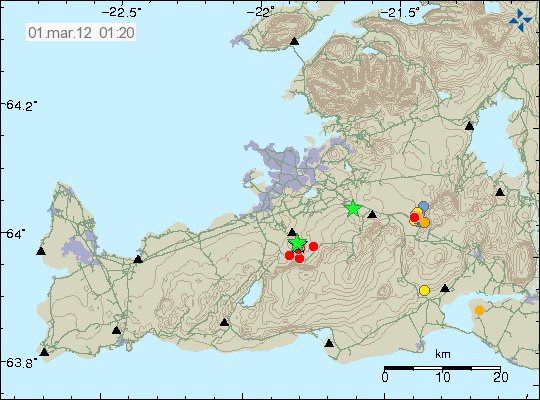
Update 1: More strong earthquake activity is taking place on the Reykjanes at this moment. The largest earthquake so far is ML3.9 according to the automatic data from IMO.

Update 2: Here is the image from Iceland Met Office of the area where this earthquake activity is taking place.


The current earthquake activity on the Reykjanes. Copyright of this picture belongs to IMO.

Update 3: The size of the second earthquake has been upgraded to ML4.2. Some minor damage has already been reported according to new from Rúv.

Blog post updated at 01:14 UTC on 01.03.2012.
Blog post updated at 01:39 UTC on 01.03.2012.
Blog post updated at 01:52 UTC on 01.03.2012.

Icelandi News about the earthquake in north Iceland. All news are in Icelandic.

Jarðskjálfti upp á 3,5 út af Gjögurtá (mbl.is)
Snarpir skjálftar fyrir norðan (Vísir.is)
Skjálfti út af Eyjafirði (Rúv.is)

News about the earthquake on the Reykjanes. All news are in Icelandic.

Skjálftakippur á höfuðborgarsvæðinu (Rúv.is)
Jarðskjálfti fannst vel á höfuðborgarsvæðinu (Vísir.is)
Jarðskjálfti við Helgafell (mbl.is)

Two minor earthquake swarms in Hengill volcano

Yesterday, last night and this morning there has been minor earthquake swarm in Hengill volcano. This earthquake swarm is more or less over for now. But it might pick up at any time. This time around only around 140 earthquakes where detected in this two earthquake swarms.


The earthquake swarm in Hengill volcano. The location of this earthquake swarm is quite common. Copyright of this picture belongs to IMO.


The earthquake swarms in terms of each earthquake being marked. This clearly shows the two earthquake swarm pattern. Copyright of this picture belongs to IMO.

More earthquake swarms should be expected in this area. As Orkuveita Reykjavíkur (OR) continues to pump down water in this area. But that is creating this earthquakes it seems. This earthquake activity takes place at random times.

Minor earthquake cluster in Katla volcano caldera

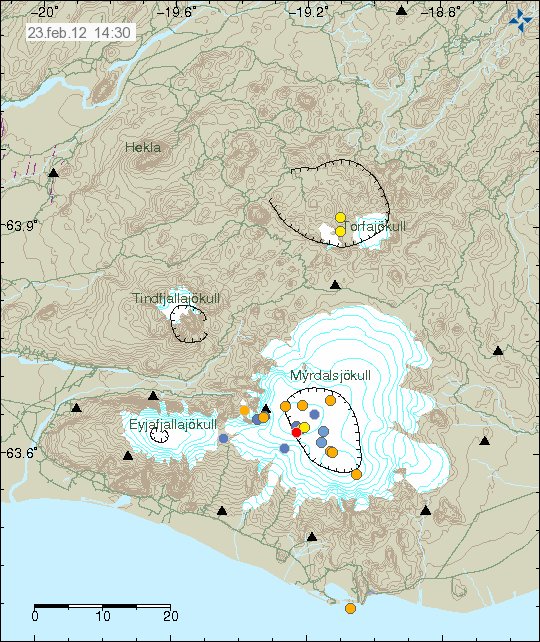
There seems to be forming of minor earthquake clusters in Katla volcano caldera. But this has been following growing number earthquakes in Katla volcano caldera during past few weeks. This is most likely an signal of increased activity in next few weeks to months. But the increase does not have to been slowly up. It can be sudden as did happen in July 2011 in Katla volcano caldera when earthquake activity did increase suddenly and there was an small eruption without an warning.


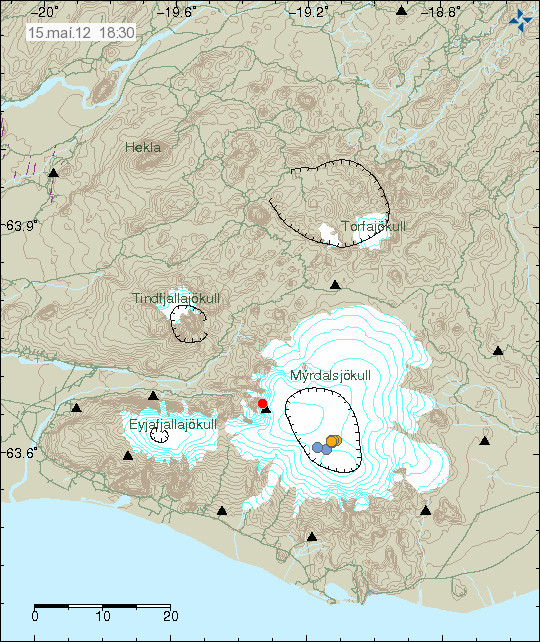
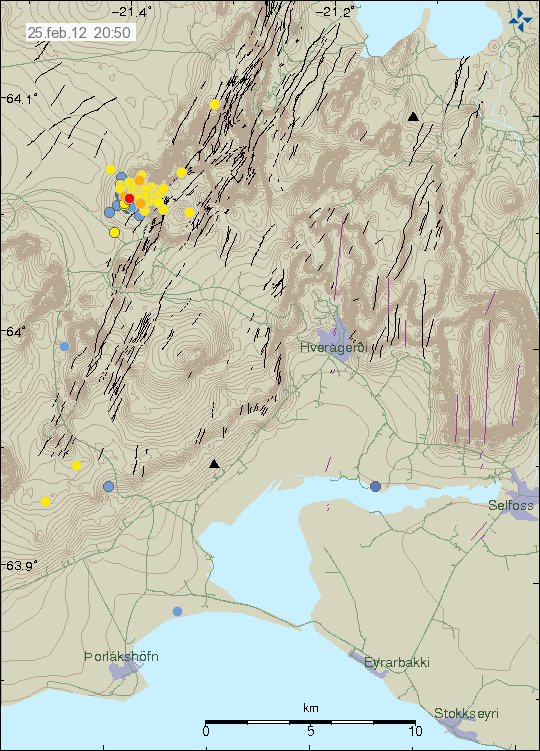
Current earthquake activity in Katla volcano. Note the small cluster of earthquakes close the area where an small eruption took place in the year 1999. Copyright of this image belongs to IMO.

There has been some small cluster of earthquakes taking place in Katla volcano caldera. I am not yet sure what that means at the moment. However this might be clues to minor dike intrusions into Katla volcano caldera. But without more data, it is impossible to be sure on this detail at current time.

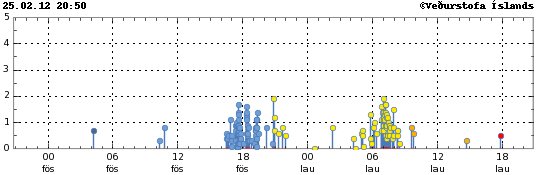
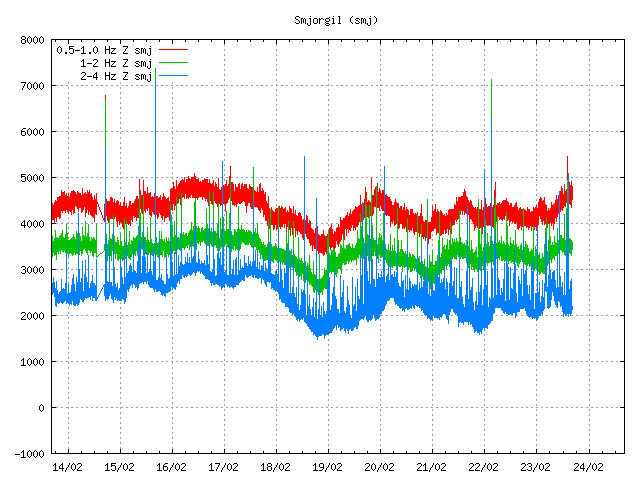
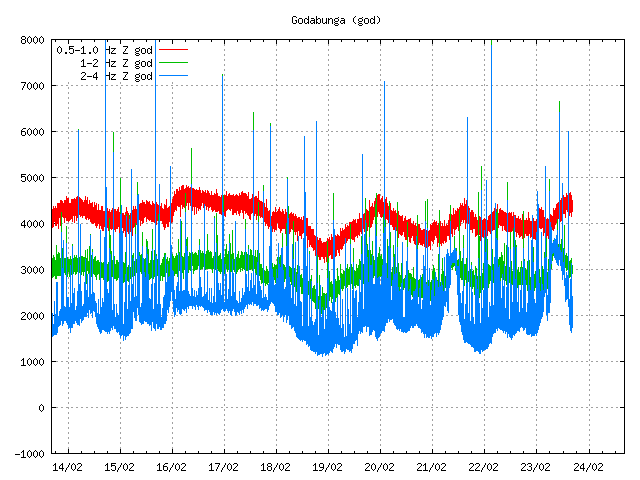
Last night there was an change in harmonic tremor on two SIL stations around Katla volcano. But due to high wind noise I am unsure what was going on. But it is possible that this was an small dike intrusion taking place close to Goðabunga part of Katla volcano, or this was an minor glacier flood that was taking place under the glacier. At current time I have no good idea what was going on.


The harmonic tremor on Smjörgil SIL station. The signal is unclear due to high wind noise. Copyright of this picture belongs to IMO.


The harmonic tremor signal on the Goðabunga SIL station. Due to high wind the signal is unclear and hard to see. Copyright of this picture belongs to IMO.

It is hard to know for sure what happens next in Katla volcano. But important signs can be found in earthquake patterns. But it is also important not to overlay broad interpret the data in the favor of an eruption taking place. As it is impossible to know for sure when Katla volcano erupts, and then how big. All we might get is an new small eruption like in July 2011. As Katla volcano can also have small eruptions like big ones.

Earthquake swarm on Reykjanes Ridge this morning

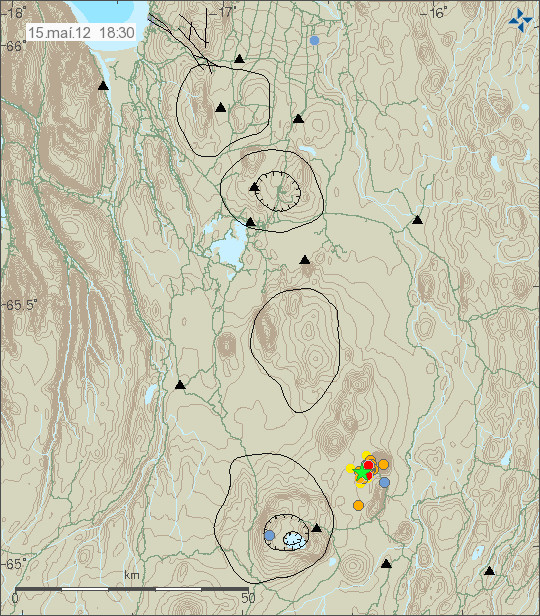
This morning at 05:48 UTC an earthquake swarm started on the Reykjanes Ridge. The earthquake swarm is believed to have been created by an dike intrusion in the area. Around 40 earthquakes have been recorded so far, the largest ones have had the size over ML3.0 in magnitude. But at the moment the earthquake swarm has stopped or is doing some idle time. As this earthquake swarm was created by an dike intrusion. It is not impossible that is going to resume in few hours to days time. But it is hard to know for sure what happens next in this area.


The area of activity. Please note that some earthquakes have wrong location due the distance from the SIL network. Copyright of this picture belongs to IMO.

This activity of dike intrusions suggests that this area of Reykjanes Ridge is getting more active then it has been since the year 1926, when the last confirmed eruption took place. But there might have been unconfirmed eruptions on the Reykjanes Ridge in the years 1966 and in 1970. It is also most likely that dike intrusion activity is going to continue for some time now. But as I sad above, it is impossible to know how long the breaks are going to be between activity episodes. Last large earthquake swarm in this area took place in early 2010 (Erik blog post about it can be found here). That activity was about one month before the eruption in Eyjafjallajökull volcano.

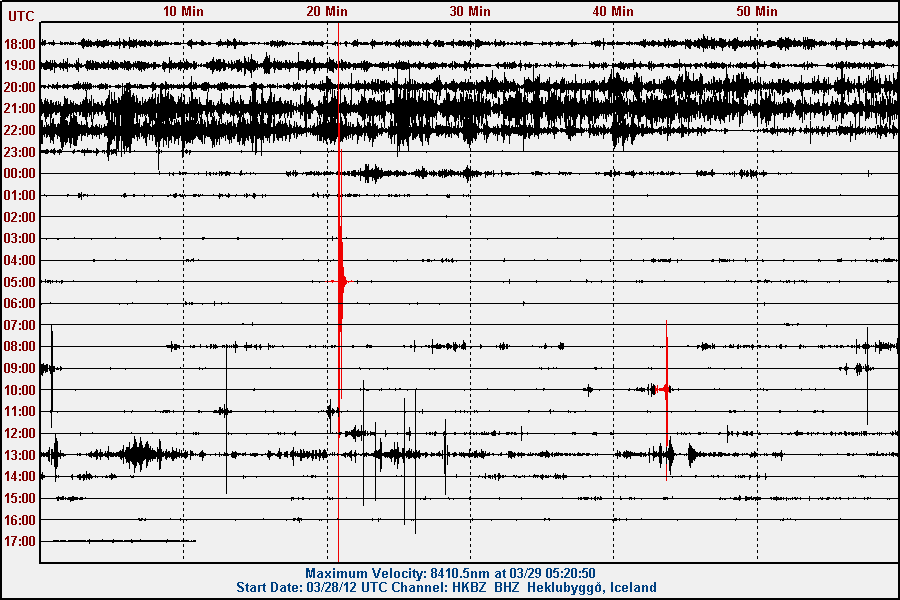
Largest earthquakes of this earthquake swarm appeared clearly on my geophones where the noise level was not too high. They can be viewed here on the 24 hour plot.

Icelandic news about this activity. Use Google translate and hope make sense of it.

Skjálftahrinan í rénun (Rúv.is)
Skjálftar við Eldey (Rúv.is)
Jarðskjálfti upp á 3,8 stig (mbl.is)
Á fjórða tug skjálfta við Eldeyjarboða (DV.is)

More earthquake activity in Katla volcano

Yesterday (05.02.2012) there was an new earthquake swarm in Katla volcano. This activity suggests that it was due to dike intrusion as before in the Katla volcano caldera. The largest earthquake was ML2.1 with the depth of 0.1 (~100 meters) km. So this where really shallow earthquakes this time around.


The location of the earthquake swarm in Katla volcano yesterday. Copyright of this picture belongs to IMO.

This pattern of activity has been ongoing since July 2011, when a minor eruption took place in Katla volcano caldera. I am expecting this pattern of activity to continue for some time now. For how long I do not have any idea. It depends if this going to end in a larger eruption then took place in Katla volcano in July 2011 or if this is going to quiet down one day for several more years.

Activity in Katla volcano can be observed on Iceland Met Office pages. It also can be observed on a geophone that I run in Skeiðflöt (website here), a farm located few km south of Katla volcano.

New hot springs in Greenland after an earthquake (swarm?)

While hot springs are in few areas of Greenland. They are not common and not as hot as those in Iceland. I do not know a lot about the details of geology of Greenland. So I am unsure on the details why there are hot springs in Greenland to start with. But this news is even more interesting for that exact reason.

According to the Greeland Radio new hot springs opened up in the village of Kangersuatsiaq of the west coast of Greenland. After an what appears to be swarm of earthquakes, with the largest one somewhere around ML2.9 to ML3.? (enough to sake people pictures on the wall). A new hot springs did open up following this earthquakes. The water seems to be around 20C to up 36C. It might be warmer, as details on this are few and little.

Best to my knowledge there is no known volcanoes in this area and have not been in the past ~65 million years or longer.

News about this in Danish and Icelandic.

Flere varme kilder i Kangersuatsiaq (KNR.gl)
Jordskælv ved Kangersuatsiaq (KNR.gl)
Vorlykt við glænýja grænlenska hveri (Rúv.is)

Earthquake swarm in Hengill volcano

There was an earthquake swarm starting in Hengill volcano. This earthquake swarm is at the usual location, close to the hydro-thermal power plant. But this earthquakes happen as the hydro-thermal power plant pumps down cold water into the ground.

This earthquake swarm started at 18:08 UTC on 04.02.2012. The largest earthquake so far in this earthquake swarm is an ML2.5 in magnitude according to automatic results from Iceland Met Office.


The earthquake swarm in Hengill volcano. Copyright of this picture belongs to IMO.

It is hard to know for sure if this is just the start of the earthquake swarm or not. But earthquake swarm have been common in this area over the past few months due to water being pumped down into the ground.

New earthquake swarm in El Hierro volcano

During the past few days there has been an earthquake swarm in El Hierro volcano in Canary Islands. Following this earthquake swarm there has been some increase in eruption activity. Resulting in some material reaching the surface of the ocean. The reason for this activity is that new magma is being injected into El Hierro volcano from depth. This magma is pushing the magma that is already there closer to the surface, creating dikes and sills in the rock along the way. This also increases the eruption in already open vents.


The harmonic tremor activity in El Hierro today. Copyright of this picture belongs to IGN.

The largest earthquakes in this swarm have had the size ML2.7 and ML3.4. They have been taking place at the depth of 12 to 15 km, based on early data from IGN.


The ML3.4 earthquake in El Hierro volcano that did happen during the night. Copyright of this picture belongs to IGN.

I am expecting this activity to continue for some time now. As it seems that more magma is coming up from depth. How long that progress is going to last is impossible to know. When it stops, it does so and only then the activity in El Hierro volcano is going to stop.

Earthquake swarm in Katla volcano caldera

This morning there was an earthquake swarm in Katla volcano. This is the first earthquake swarm of the year 2012. This earthquake swarm is most likely created by an dike intrusion. Based on how dense the earthquake swarm appears to be. But that is often an sign of an dike intrusion in an volcano. How this earthquake swarm is going to evolve over the next few hours impossible to know for sure. That depends on what the magma is going to do that is creating this earthquake swarm.
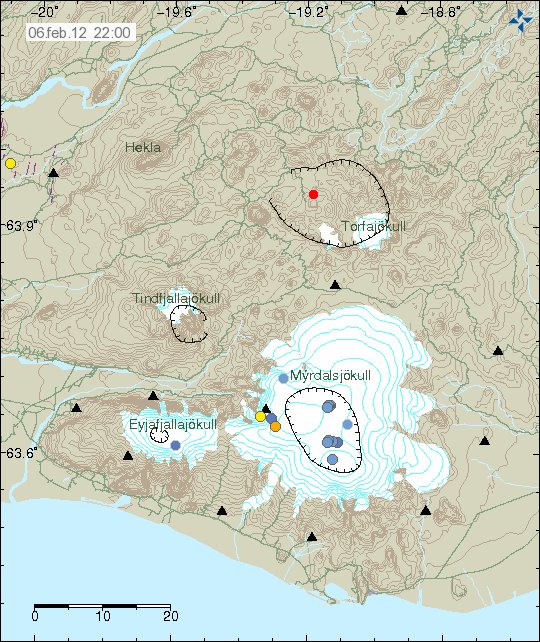

The earthquake swarm in Katla volcano. It is dense as can be on this picture from Iceland Meteorological Office. Copyright of this picture belongs to Iceland Meteorological Office.

The earthquakes can be seen on my geophone web page here (English). The geophone at Skeiðflöt is going to go up this week. So all activity in Katla volcano is going to appear more clearly following that. Sadly. No high resolution of the earthquakes that take place is not going to be available until I move back to Denmark. As my main earthquake computer is offline and is going to be so until that time.

I am going to post updates to this if anything more happens. But it might take a while as I am travelling today to Reykjavík area and tomorrow I am going to Skeiðflöt tomorrow.