Special report: Eruption at El Hierro volcano, Canary Islands

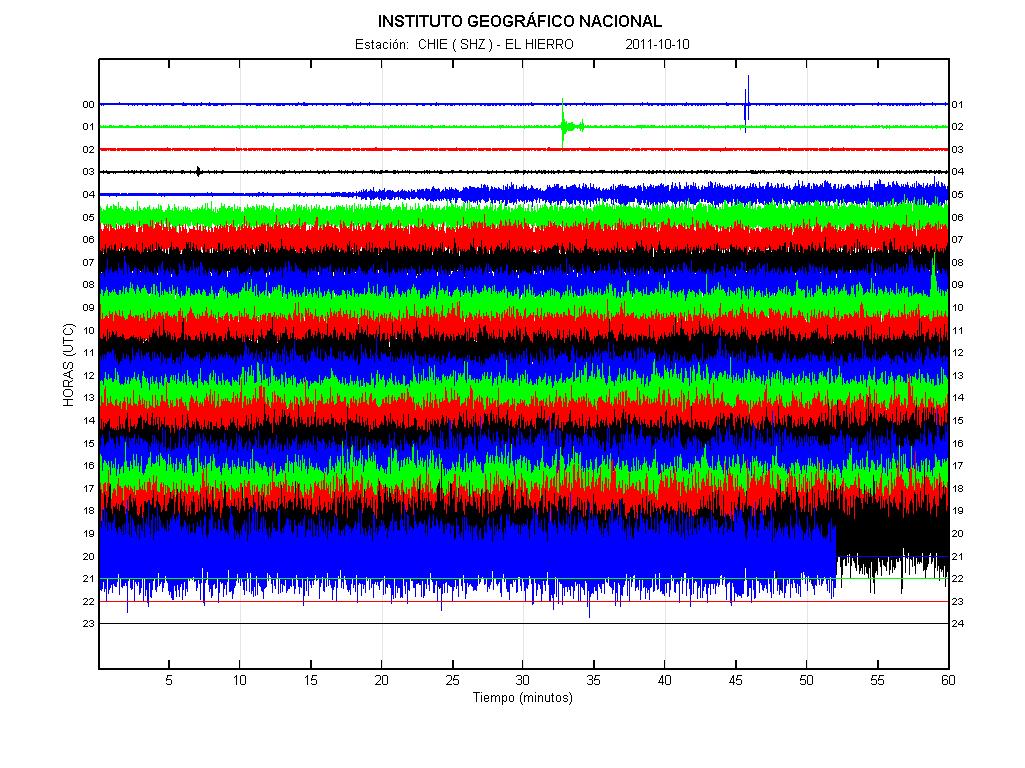
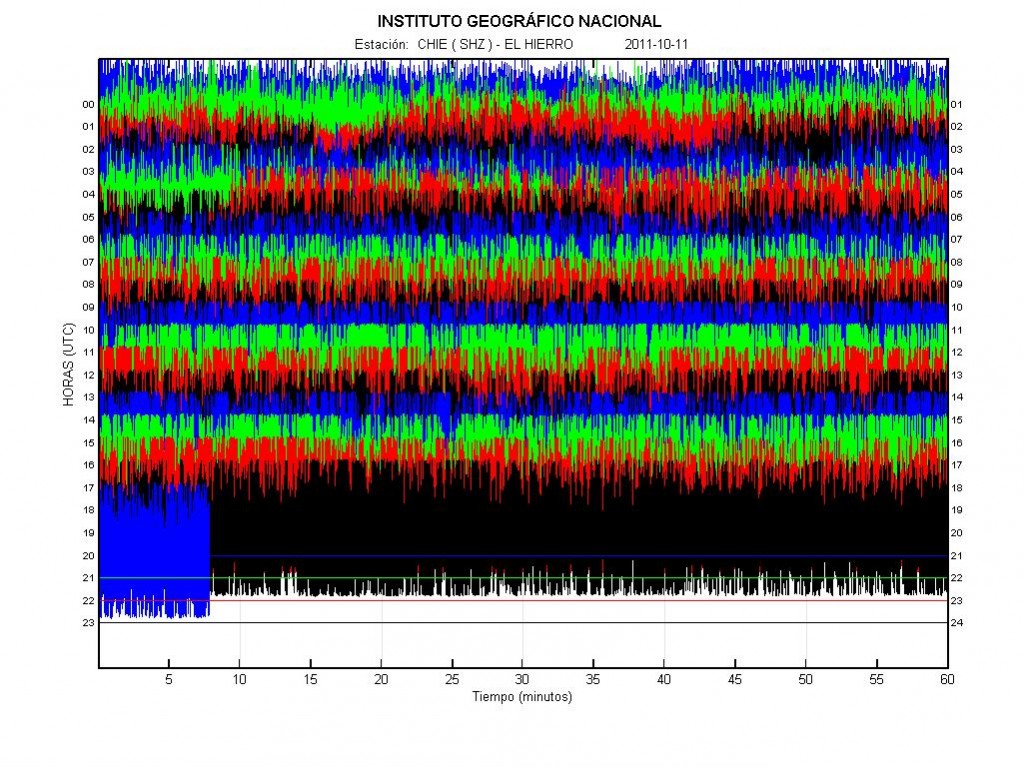
At 04:18 UTC on 10 October, 2011 a eruption did start somewhere close to the El Hierro volcano Island (but inside El Hierro volcano system). So far nothing has been seen to this eruption, so location is uncertain at the moment. At the moment this eruption has only been confirmed by harmonic tremors seen on seismometers on El Hierro island.

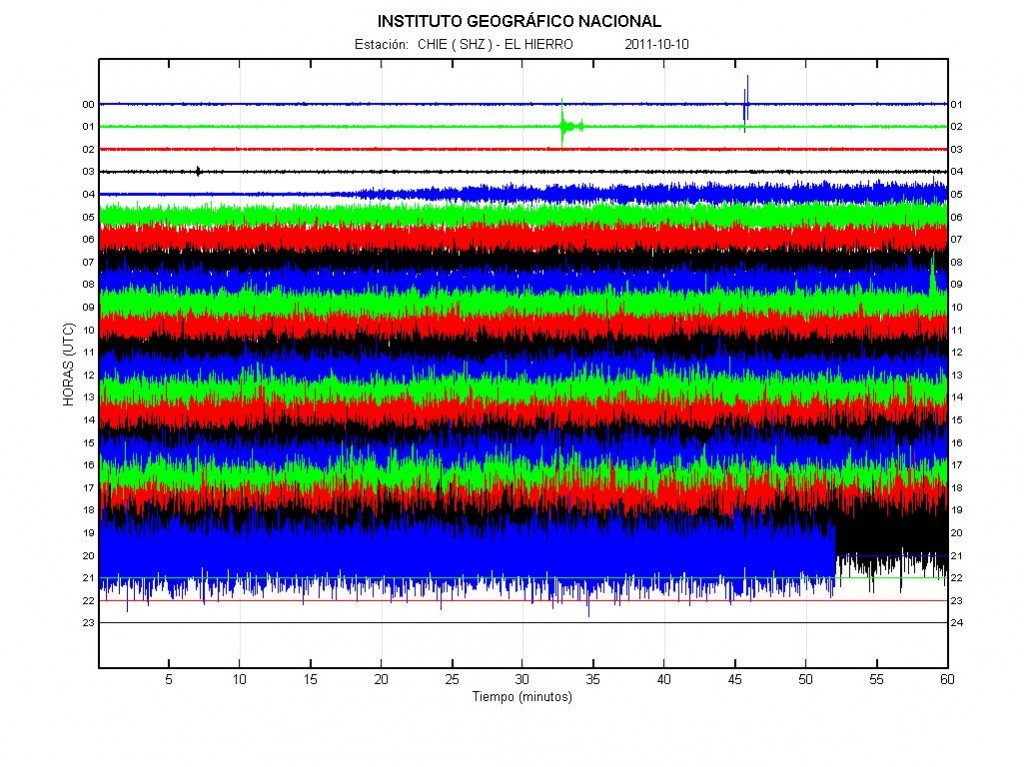
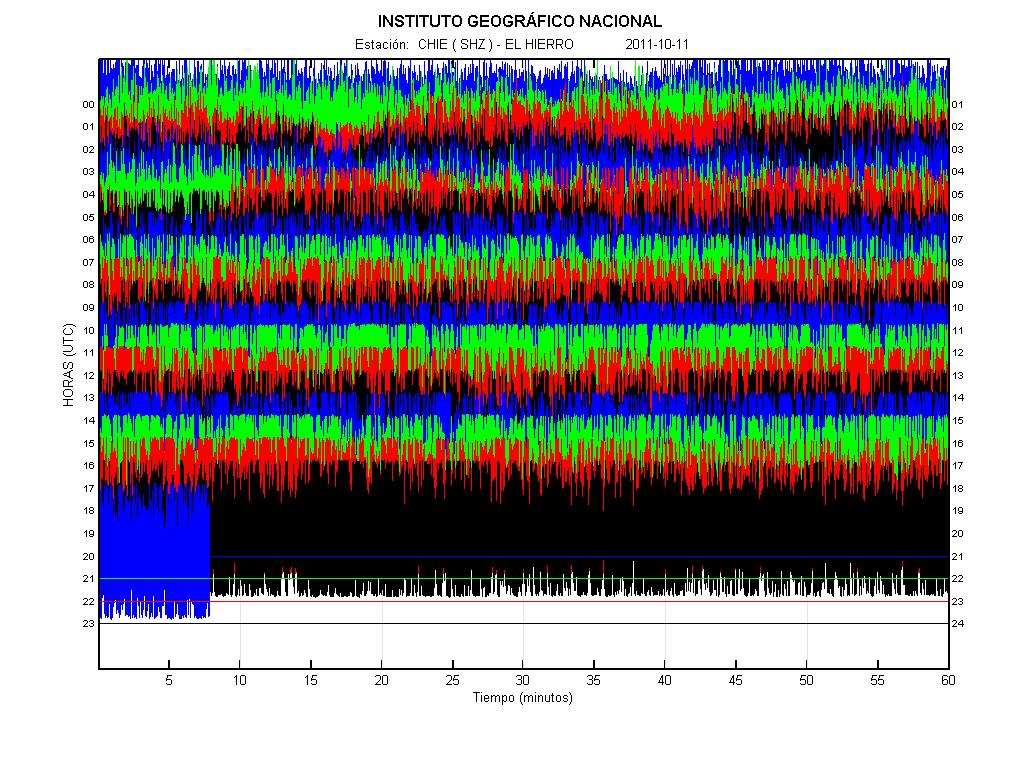
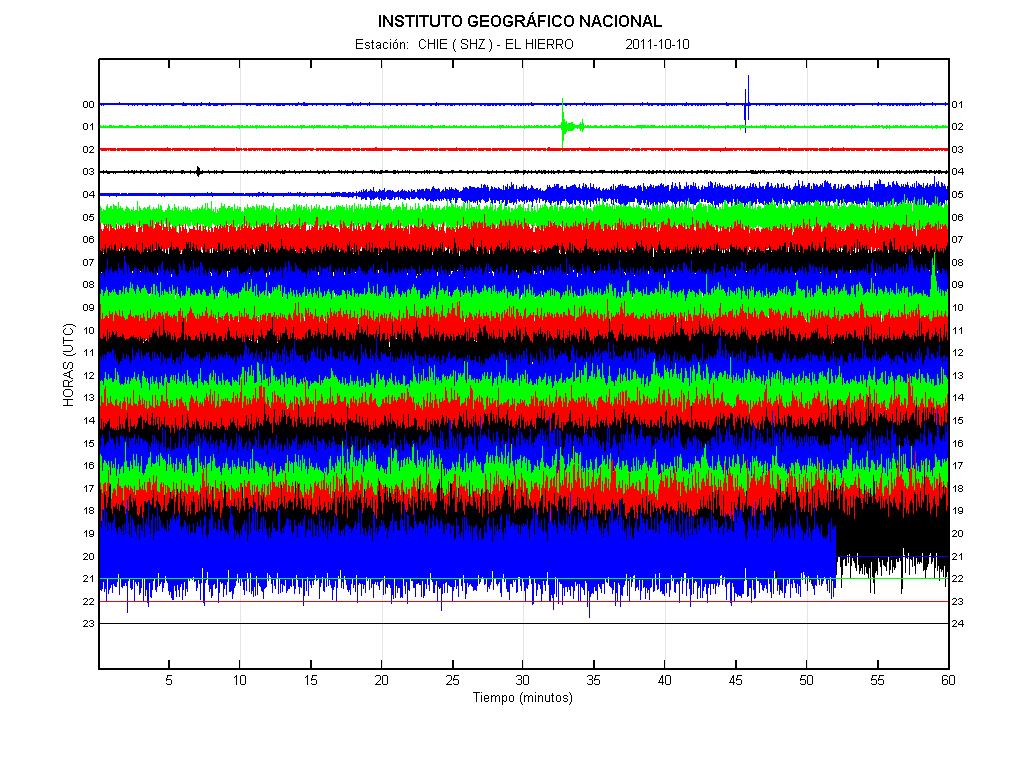
From what I can tell, based on the harmonic tremor plots. It seems that the eruption has been growing in size since it started well over 12 hours ago. This suggests that the eruption is growing in size. That also brings up the issue that new fissures might open, both into deeper ocean and on shallower depth and even on land without any warning at all.


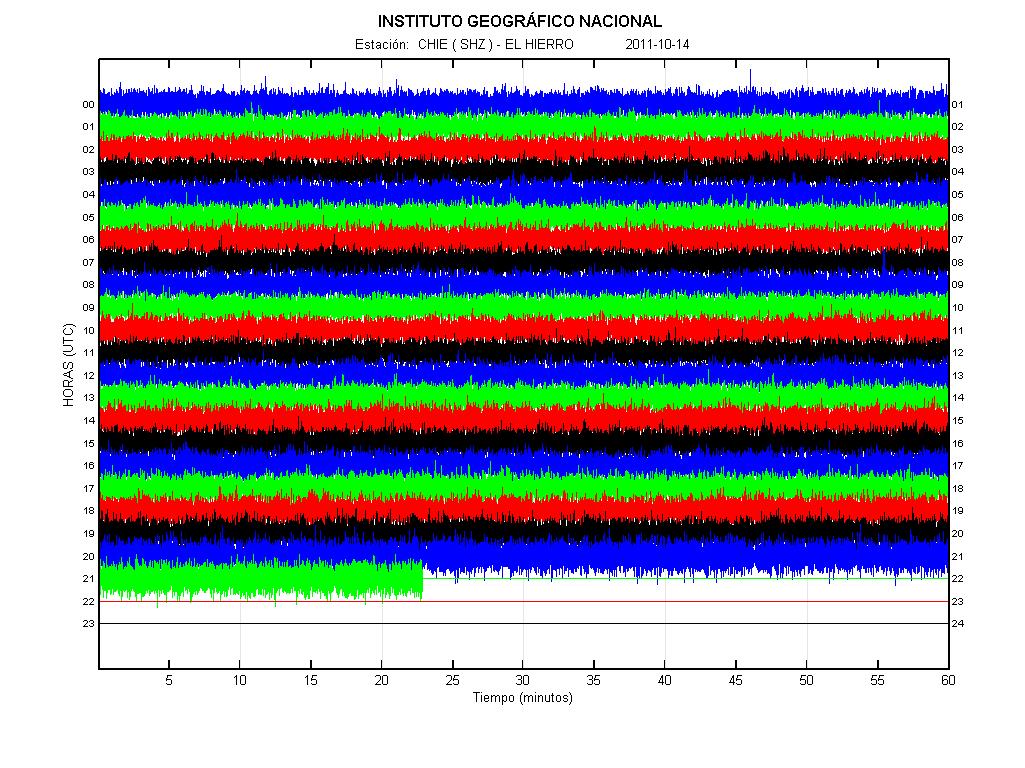
The harmonic tremor from El Hierro at 21:08 UTC on 10 October, 2011. Copyright of this picture belongs to Instituto Geográfico Nacional.
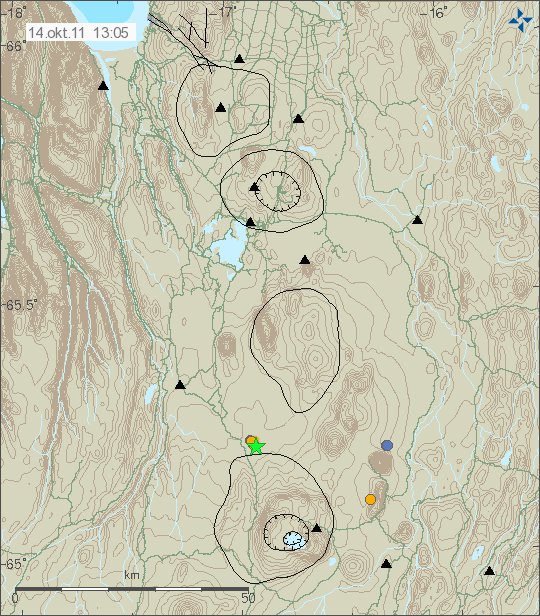
A location for the eruption has been suggested, as can be see on this map here.


The speculated eruption in El Hierro. Copyright of this picture belongs to el-mundo.es Thanks to Dr. John v. Kampen for this map via email.

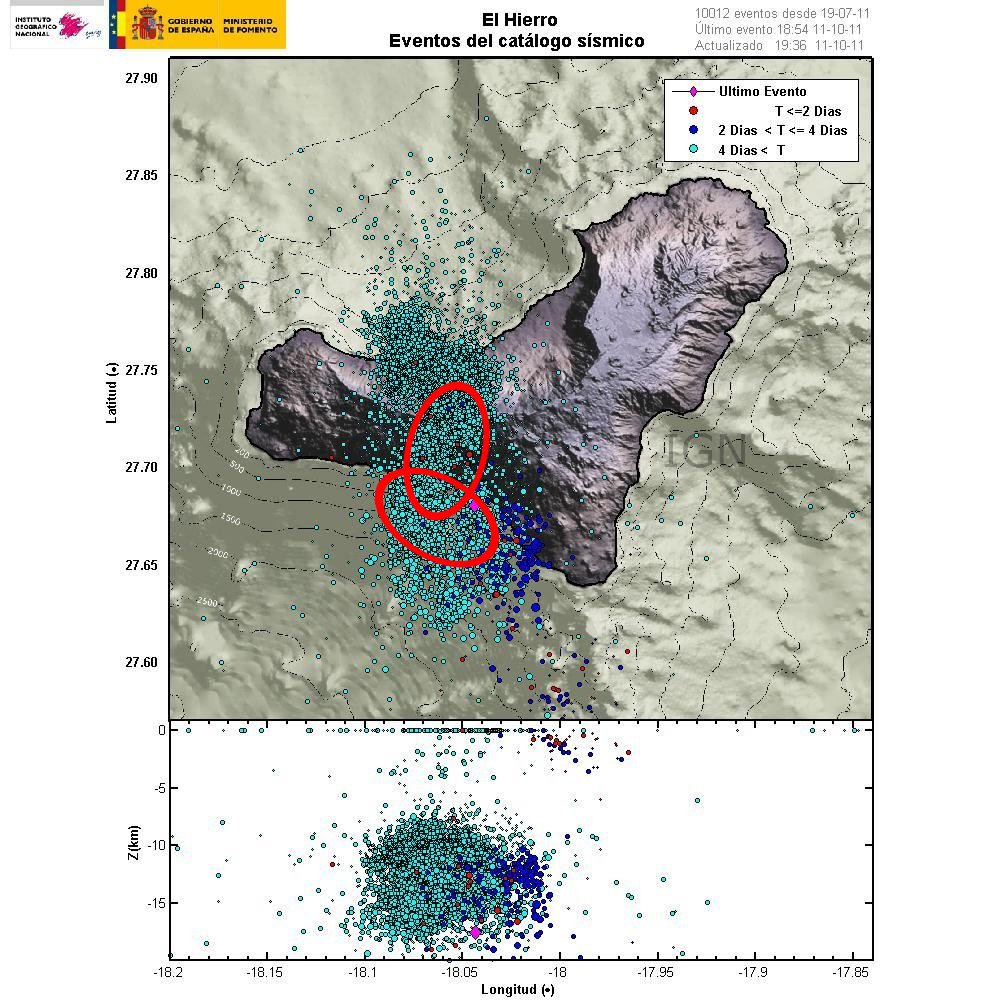
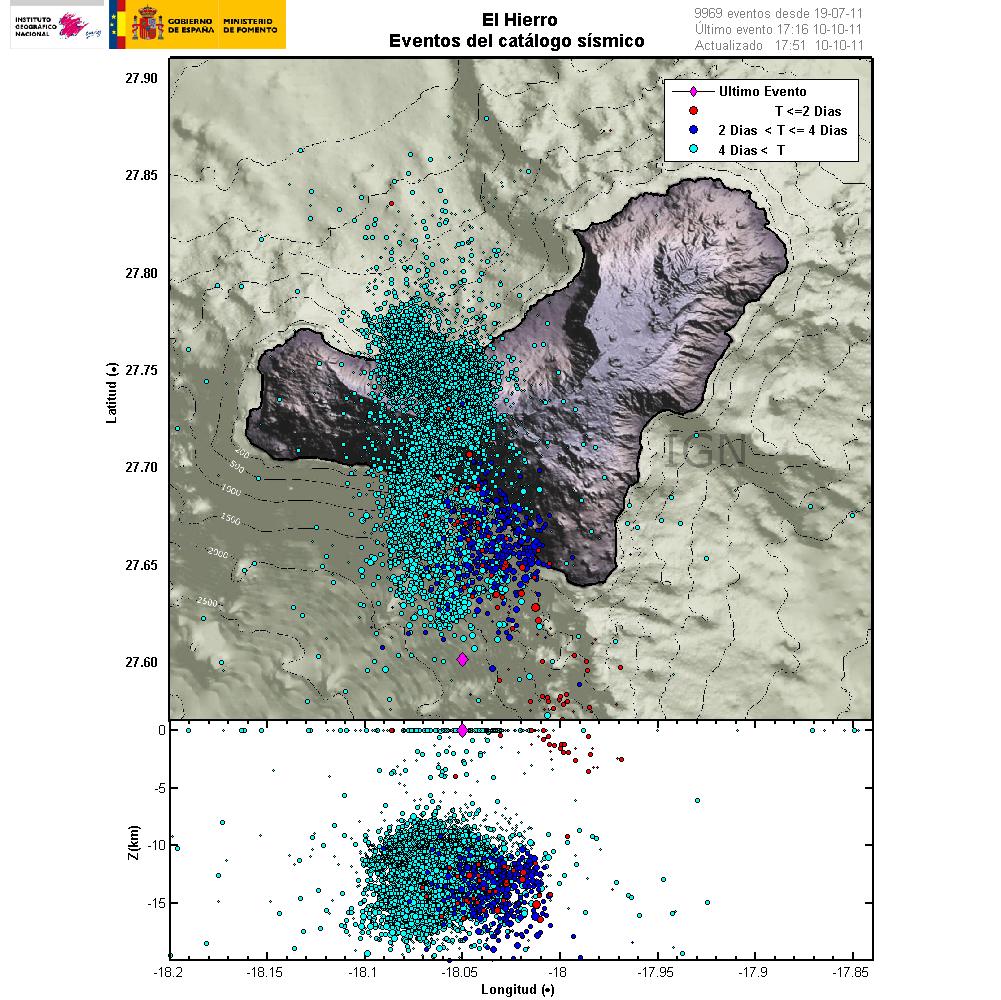
Lack of earthquakes does not mean that magma is not the move and has not reached the surface already. But this however suggests that magma now has a free flow upwards to the surface since sometimes yesterday, when the earthquake activity did drop suddenly from ~100 earthquakes to ~30 earthquakes over the day.


Current earthquake activity in El Hierro. It is my personal opinion that the eruption is around -18.05 and 27.65 to 27.70 (middle of that area, around 450 meter depth). Copyright of this picture belongs to Instituto Geográfico Nacional.


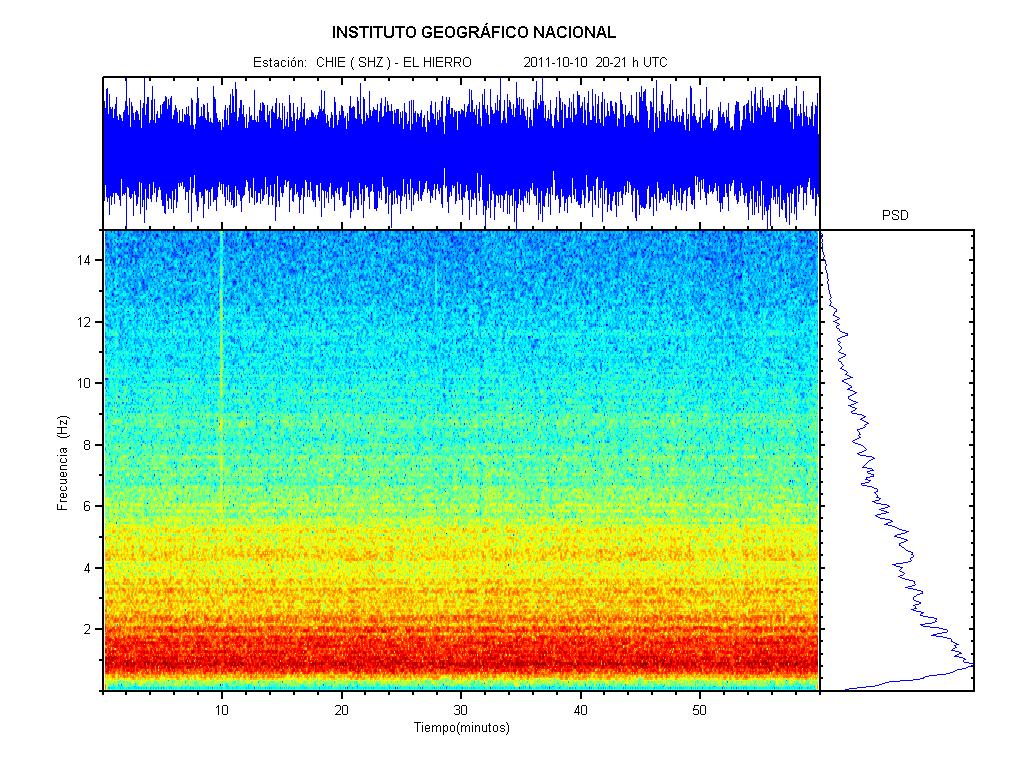
Spectral image of the harmonic tremor. This image clearly shows that the orgin of the harmonic tremor is magma on the move. Not something else. Copyright of this picture belongs to Instituto Geográfico Nacional.

I am going to update this blog post as more is known about the eruption in El Hierro.

Canary Island news about this. With thanks to Dr. John v. Kampen how did send them to me in a email.

Posible erupción al sur de El Hierro (Youtube, Spanish, Video)
¿Emergerá una nueva isla? (Youtube, Spanish, Video)

Blog post updated at 21:49 UTC on 10 October 2011.

Tremor pulses in Hamarinn volcano (most likely)

During the past two weeks there have been tremor pulses in Hamarinn volcano (is claimed to be part of Bárðarbunga volcano system), at least most likely that volcano. But it might also be a volcano that I call Skrokkalda Volcano (other name might be Hágöngur volcano) (it has no entry on GVP web page, I do not know why). But given recent history I find it unlikely to be the case.

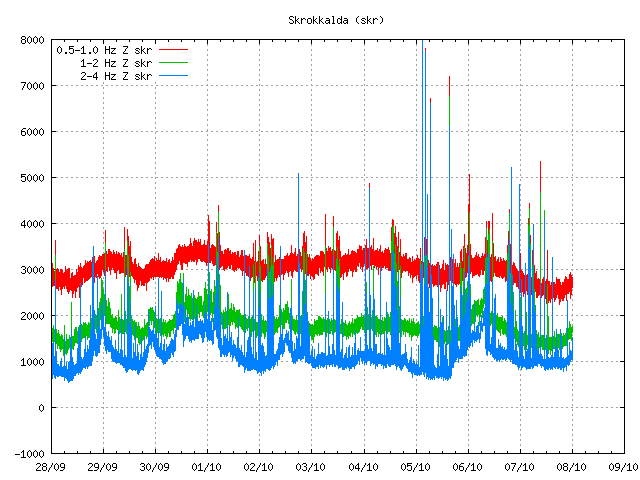
This harmonic tremors might be due to dike intrusions. I find it unlikely to be from a man made lake called Hágöngulón that is in this area. The harmonic tremor pulses look like sharp spikes on the tremor plot on the Skrokkalda SIL station.


Harmonic tremor spikes from Hamarinn volcano. Copyright of this picture belongs to Iceland Met Office.

This pattern of harmonic tremor spikes was seen all last year and all of the year 2009 from what I can remember. I do not have tremor charts from that period. But however this suggests that more magma has now started to flow into Hamarinn volcano. But there was a small volcano eruption (it seems so, given the flood that took place in July) in Hamarinn volcano last summer (summer 2011). What happens next is a good question.

This process of inflow of magma seems to without earthquakes, or close to it. I do not know why that is and I have no ideas that explain it.

Large earthquake swarm in Katla volcano

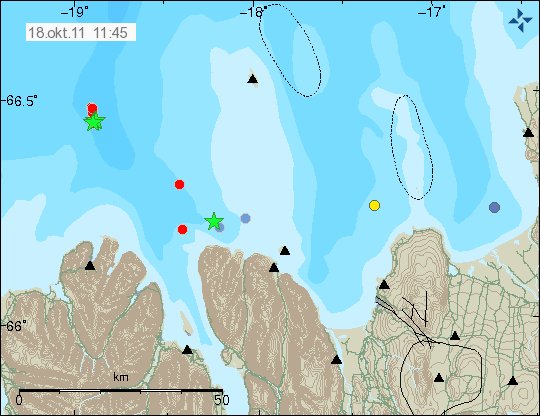
At 02:45 UTC a large earthquake swarm did start in Katla volcano. I do not know if this an start of a eruption in Katla volcano or not. For the moment it is too early to know for sure. I have to wait few more min before that becomes clear on the harmonic tremor plots. The largest earthquake so far according to the automatic SIL systems is a ML3.9 earthquake.


The earthquake swarm in Katla volcano. The second green star is from a fake ML3.3 earthquake from yesterday. Copyright of this picture belongs to Iceland Met Office.


The harmonic tremor plot on Slysaalda SIL station at 03:04 UTC on 5 Október 2011. Copyright of this picture belongs to Iceland Met Office.

It takes a few moments to become clear if Katla volcano is starting a eruption or not. I am going to post updates as this situation changes if I have too.

Magma on the move in El Hierro, Canary Islands

This is happening faster then I expected. But it seems that magma is now on the move upwards in El Hierro volcano in Canary Islands. This is evident by the earthquake patterns that are emerging from the volcano. Given the earthquake locations, most likely place for a eruption to take place is out on the ocean based on that. But sometimes magma can find different pathways up the surface without a lot of warning.


Latest earthquake map from Instituto Geográfico Nacional that shows clearly the earthquake pattern since the dike intrusion did start in El Hierro. Copyright of this picture belongs to Instituto Geográfico Nacional.

At the moment it is impossible to know when and where a eruption might start. It depends on many factors. But it is now clear that magma is on the move upwards. So far the magma seems to be around 10 km up in the earth crust under El Hierro. So it is clear that the magma is on the way up and most likely preparing for a eruption.

What is happening in El Hierro volcano

This is a special blog post about the volcano El Hierro in the Canary Islands. The resons for this blog posts are those that this activity is interesting and there is not a lot happening at the moment in Iceland due to bad weather (nothing gets recorded in this bad weather).

Currently El Hierro volcano is a phase that I personally call a magma intrusion phase (I have no other word for it). But that means that magma is currently coming from a depth, that is more then 20 km below the volcano and up the crust directly below the volcano. It is impossible to know how long this phase is going to last. As a example this phase for Eyjafjallajökull volcano lasted for good part of 17 years (with some breaks). When the pressure is high enough in the sill that is now forming in El Hierro the magma is going to break up the surface.

This pattern can clearly be seen on this image here.


The magma is flowing up into the volcano at around 30 degree angle from the depth of more then 20 km. When a new magma injection starts, a new earthquake swarm starts in El Hierro. This magma injections are different in size and length. But as more magma collects into the bedrock in El Hierro the stronger earthquakes are going to take place. But this increases the pressure on the rock and inside the magma chamber that is now forming and can clearly been seen with the earthquake pattern. Copyright of this picture belongs to Instituto Geográfico Nacional.

I did see a picture that was made on Eruptions blog that did show his clearly, both the feeder channel of the magma and the magma chamber that is currently in the making. It seems that magma inflow into the new magma chamber or the sill in El Hierro is stable at the moment. But I base that view on the constant earthquakes that are currently taking place. But this magma inflow seems to have been stable since 16 July, 2011 when the magma started to push upwards into El Hierro.

Earthquakes that signal new inflow of magma do not need to be strong in size. But they are deep, with the most depth around 20 km. But the crust in this area is around 10 to 26 km thick. As this is a ocean crust in this area. But the Canary islands are the thickest crustal part in the area. But it is also important to notice that the magma chamber or the sill is expanding in all directions, not just upwards. That in it self is also going to create deep earthquakes. But those earthquakes should remain a bit outside the main area of the deep earthquakes that are currently taking place in the area.

I am expecting a lot more earthquake activity when or if El Hierro starts erupting. But when that might happen impossible to know for the moment. The only thing that can be done is too wait and see what happens.

Update 1: Here is the earthquake activity for today (30 September, 2011).


Earthquake activity of today (30 September, 2011). There is less earthquake activity today. This happens when magma flows into a volcano. This did also happen with Eyjafjallajökull volcano in the year 2010. If anyone has the direct link too this plot, please leave it in the comments. Thanks. Copyright of this picture belongs to Instituto Geográfico Nacional.

Update 2: Links too El Hierro information can be found here.

Update 3: The Spanish news channel Canal 24 can be found here and it is live.

Update 4: Here is a news in english about the evacuation of El Hierro. It is from 28 September, 2011. Evacuation of El Hierro begins as fears of volcanic eruption grow. Thanks to Dr. John v. Kampen that did send this to me with a email.

Note: There are new pictures of Eyjafjallajökull volcano, Fimmvörðuháls craters here. They show the difference from the year 2010 and in the year 2011. The text is in Icelandic.

Also. Please support my effort so I can buy two new geophones and add them to my monitoring network in Iceland. Thanks! 🙂

Blog post has been updated 30 September, 2011 at 22:12 UTC.
Blog post has been updated 30 September, 2011 at 22:25 UTC.
Blog post has been updated 30 September, 2011 at 23:08 UTC.
Blog post has been updated 1 October, 2011 at 14:48 UTC.

Hengill volcano man made earthquake swarm

The man made earthquake swarm in Hengill volcano that happened today seems to have subsided, as it is most likely that Orkuveita Reykjavíkur has stopped pumping down water into the new drill hole that they where using today.

Over 400 earthquakes have been recorded in this man made swarm. I am not sure on the depth on most of the earthquakes. But it is in the range of 1 to 10 km from what I can tell. The largest earthquake in this earthquake swarm was ML3.4 in size, it had the depth of 3.9 km.


The man made earthquake swarm in Hengill volcano. Copyright of this image belongs to Icelandic Met Office.

I am going to post earthquake traces on Sunday or Monday. I am currently not at “home” (where my main computers are located), as I am taking this weekend off (if nothing large happens this weekend).


Two of the earthquakes from the man made earthquake swarm in Hengill volcano. This picture is released under Creative Common Licence. See licence web page for more details.

It is hard to know what happens as Orkuveita Reykjavíkur continues to pump down water into Hengill volcano. All that can be done is too wait and see what happens.

Blog post updated at 21:48 UTC on 26. September 2011.

Earthquakes in Katla volcano, strong sulphur smell in Múlakvísl river before the earthquake happened

This morning there has been some earthquake activity in Katla volcano. But it has also been reported in the news this morning that a really strong sulphur smell was found around 06:00 UTC on nearby farm to Múlakvísl river this morning. But this was before the earthquake did happen. I am not sure if this sulphur smell continues to be felt in the area close to Katla volcano. No changes in water hight has been detected in Múlakvísl glacier river.

The ML2.6 earthquake in Katla volcano was on 2.3 km depth. This was mostly a dike intrusion into the bedrock of the Katla volcano caldera.


The earthquake swarm this morning in Katla volcano. Copyright of this picture belongs to Iceland Met Office.


High resolution of the Katla volcano earthquake this morning. Along with correct depth and size. This picture is released under Creative Commons licence. See Licence page for more details.

As before. This is just a wait and see what is going to happen in Katla volcano as before.

Icelandic News of the sulphur smell in Múlakvísl glacier river.

Brennisteinslykt fannst við Múlakvísl í morgun (Vísir.is, Icelandic)
Brennisteinslykt við Múlakvísl (mbl.is, Icelandic)

Update 1: According the news on Rúv this activity suggests that hydrothermal activity is continuing to increase in Katla volcano caldera. But the news also says that this activity is something like that did happen from the year 2002 to the year 2004, when hydrothermal activity did increase before it started to get lower again. It is also pointed out my Matthew Roberts that Múlakvísl glacier river is sensitive to changes in Mýrdalsjökull glacier and small floods can happen without any warning in it due to increased hydrothermal activity.

Rúv news in Icelandic about this.

Bendir til aukinnar jarðhitavirkni (Rúv.is, Icelandic)

Blog post updated at 13:07 UTC, 23 September 2011.

A ML2.7 earthquake in Skagafjörður rift zone (mostly extinct one)

This earthquake is a odd one. But it is rare that earthquakes happens in this are of Iceland. But it is not unheard of. As there have even been small earthquake swarm in this area few years ago (2 or 3 years ago I think). This area is part of Skagafjörður rift zone (pdf file) (also known as Skagafjörður Volcanic zone), but that is believed to be a failed rift zone that formed in about 1.7 million years ago. Just around when current eastern rift zone started to form in Iceland.


The ML2.7 earthquake is the left corner of this image, a bit far away from TFZ earthquake zone. Copyright of this image belongs to Icelandic Met Office.


The ML2.7 earthquake seen from Sauðárkrókur geophone that I am going to run until December 2011. Sadly, no live gif image of it due to network issues. Please note that this geophone is in a noisy location. This picture is released under Creative Commons Licence. See licence web page for more details.


The ML2.7 seen on Hvammstangi geophone. Sadly, no live gif image of it due to network issues. This picture is released under Creative Commons Licence. See licence web page for more details.

I do not know if there are going to be more earthquakes in this area. But it seems that this earthquake has happened in a area with known faults from post-glacial times (they are on my geological map of Iceland). So for now all that can be done is to wait and see what happens next this this area. But I am not expecting anything special in terms of more earthquake activity. There are no active volcanoes in this area.

New earthquake swarm in Katla volcano

After few quiet days in Katla volcano. It seems that new earthquake swarm is about to start in it. But this earthquake swarm did start with a ML2.8 earthquake (automatic size) at 10:55 UTC. This earthquake have been followed by smaller earthquakes. So far there have not been many earthquakes in this earthquake swarm. But the largest earthquake took place on what I think is the fissure where the eruption in the year 1918 took place.


The earthquake swarm can be seen here. Copyright of this picture belongs to Iceland Met Office.

The largest earthquake clearly has magma signature in my opinion. As it can be seen on my geophone recording of this earthquake.


The ML2.8 earthquake. This picture is released under Creative Commons Licence. Please see licence web page for more details.


High resolution of the Katla volcano ML2.8 earthquake. The bump later on this earthquake trace is the second earthquake that only had the size ML0.9 according to the automatic size estimate. This picture is released under Creative Commons Licence. Please see licence web page for more details.

There seems to have been some type of tremor event on Goðabunga SIL station just before the earthquake. I am not sure what event this was. But it does not appear on other SIL stations around Katla volcano.


Goðabunga SIL station. Copyright of this picture belongs to Iceland Met Office.

For the moment the only thing that can be done is to wait and see what happens in Katla volcano.

More new tremor spikes in Katla volcano

Yesterday and today there where two tremor spikes in Katla volcano. This follows a higher then normal background noise that I cannot directly trace only to wind as I did first think. What is going on is not clear, but it remains a bit of events just before the July 1999 minor eruption (suspected). But it has been speculated by scientist that event was related to inflation event deep inside Katla volcano systems. But the actual fact remains unclear. More information on the event in July 1999 can be read here (in Icelandic).

Pictures from the year 1999 of the harmonic tremor event in July that year.


The harmonic tremor spikes in July 1999 in Katla volcano. Copyright of this picture belongs to Iceland Met Office.

There was also special note on this tremor chart here from skh SIL station (now gone). But in the year 1999 this signal was most clear on Snæbýli SIL (snb). But today this signal appears to be most clear on Goðabunga SIL station and Eystri-Skógar SIL (esk) SIL station. I do not know what the difference is. But it clearly is something.


The harmonic tremor spikes in July 1999 in Katla volcano. Copyright of this picture belongs to Iceland Met Office.


The harmonic tremor spikes in July 1999 in Katla volcano. Copyright of this picture belongs to Iceland Met Office.

Please note that all earthquakes have been cleared from this old SIL tremor plots.

Current day activity in Katla volcano looks like this on the SIL stations where it is most clearly seen.


Odd spikes can be seen here on this tremor plot. I do not know what they are. Copyright of this picture belongs to Iceland Met Office.


Hard to see spikes can be seen on Goðabunga SIL station. They are the same as from Eystri-Skógar SIL station. Copyright of this picture belongs to Iceland Met Office.


Same as above. But stronger then on Goðabunga SIL station. Copyright of this picture belongs to Iceland Met Office.

It is hard to know for sure what this signals means. But I am sure that this signals are going to mean something someday. But when is hard to know.