Overview of current events in Askja volcano

The current events in Askja volcano started in Week 9 of the year 2010. Before that, Askja volcano has been showing signs of change since the year 2007 at least. In the year 2010, Week 9 a earthquake swarm was recorded by Iceland Meteorological Office. Most of the earthquakes where at around 20 km depth, and it was followed by considerable amount of harmonic tremor activity. I did know about it at the time, but I did think it would be at least 10 to 20 years until Askja volcano would not erupt. But this might have been a event in an series of event that started long time ago, without me knowing about it before (I am still checking data, it takes some time).


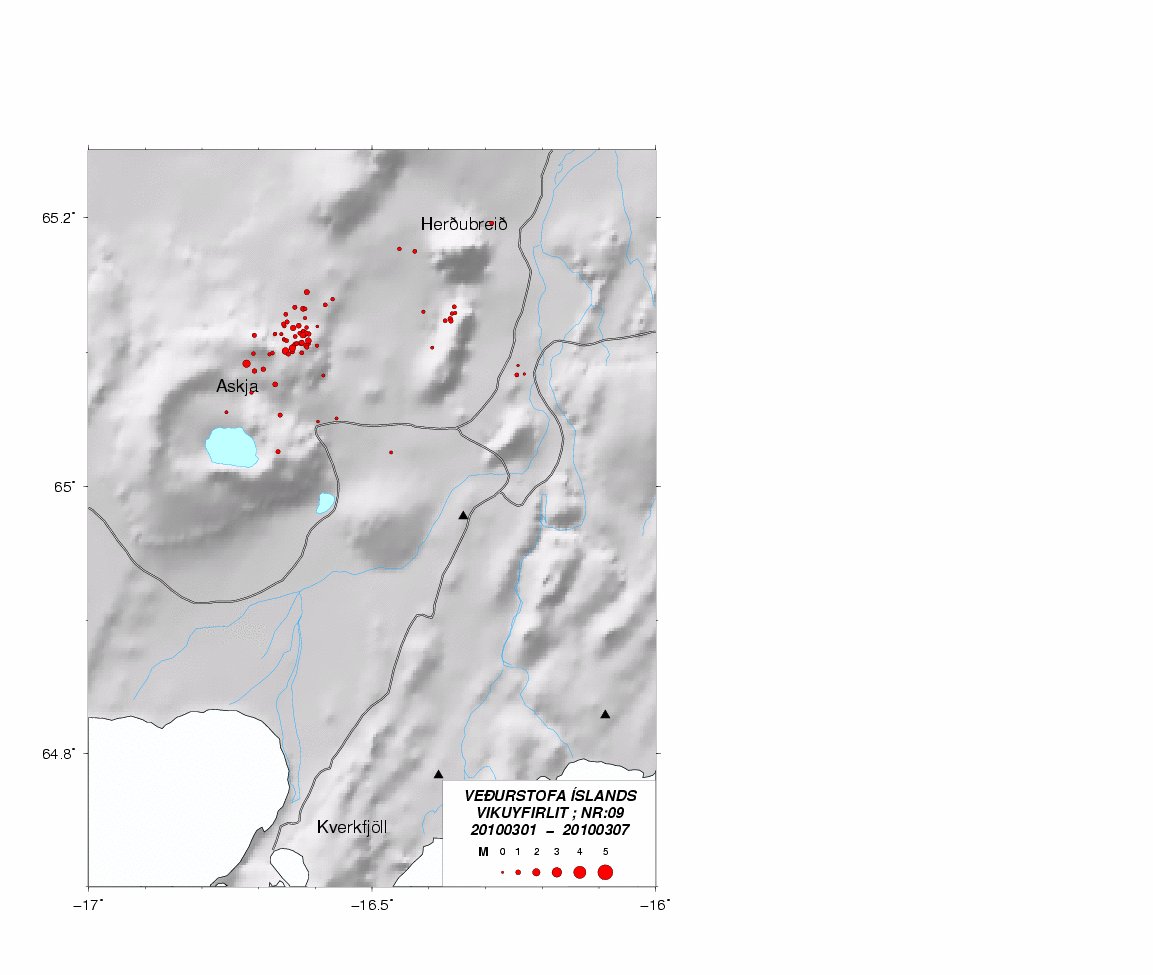
The earthquake activity in Askja volcano in Week 9 of the year 2010. Copyright of this picture belongs to Iceland Meteorological Office.

The image above clearly shows where magma was flowing into Askja volcano around 20 km depth. But they are to the north-east of Askja lake. The depth of this earthquakes was from 20 to 23 km.


Map of earthquake activity in Askja volcano. The green dots are earthquakes with a shallow depth, that is depth from 2 to 8 km. Yellow earthquakes have the depth of 12 to 30 km. This data is from the year 2007 at least. Copyright of this picture belongs to its owner (Janet Key).


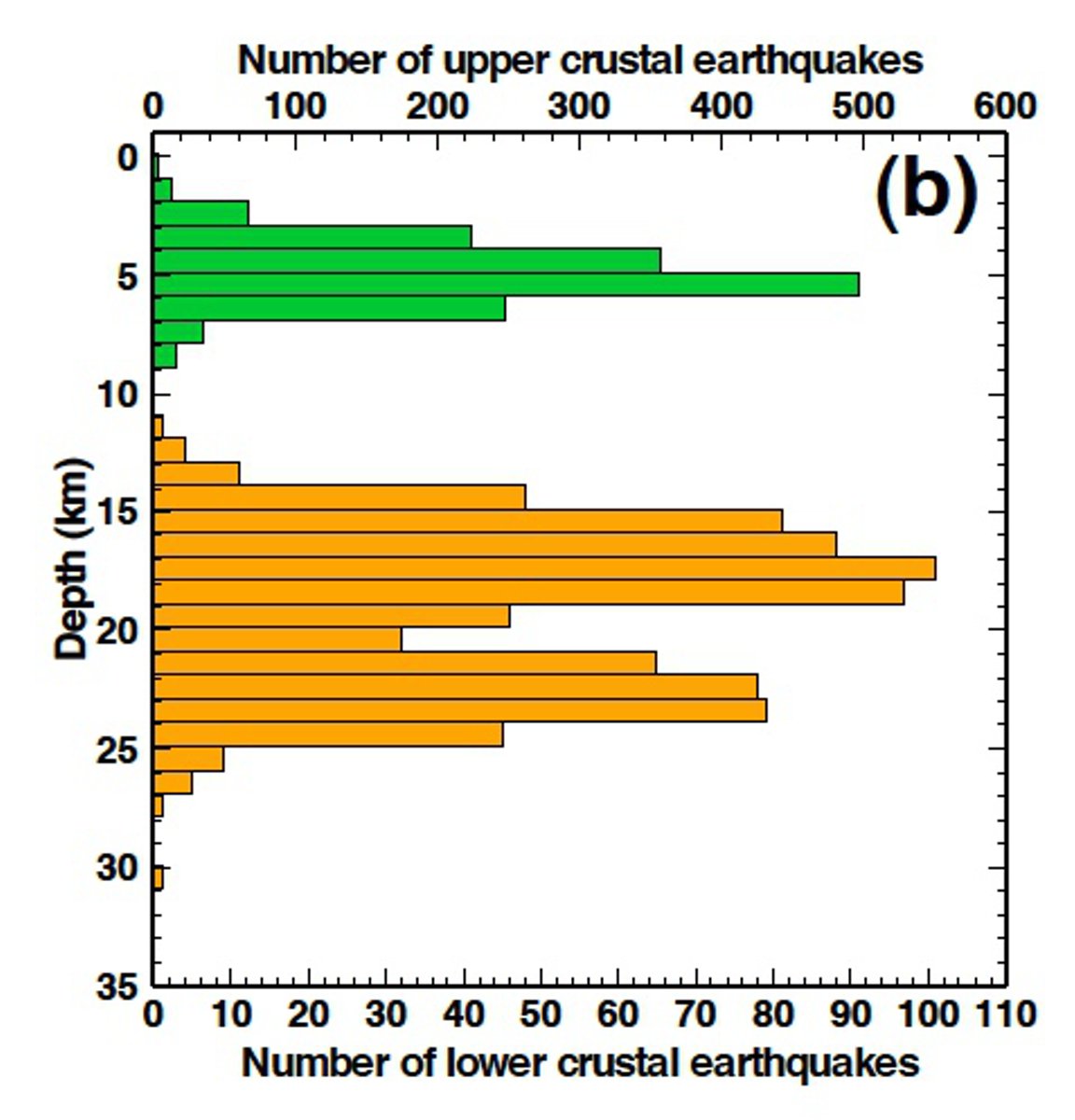
The depth of the earthquakes in Askja volcano. Copyright of this picture belongs to its owner (Janet Key).


Depth of the earthquakes. This view shows also where the earthquakes are taking place in Askja volcano and close to it. Copyright of this picture belongs to its owner (Janet Key).

All of this map and charts are from this blog post here.


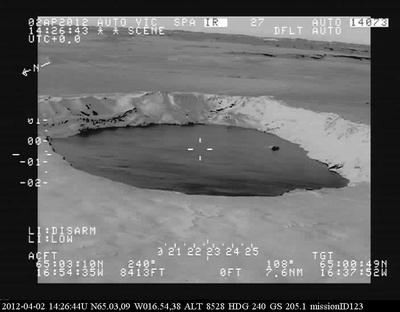
This is a heat camera image of Askja lake. Copyright of this picture belongs to Iceland Coast Guard, the image is from here.

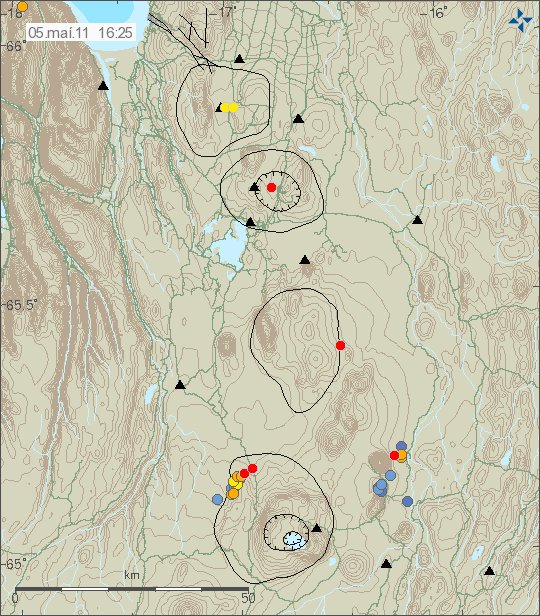
Last year (2011) there was an dike intrusion in north part of Askja volcano. This dike intrusion was clear by a earthquakes that took place. But it stopped and has not shown any activity again in this area. As sometimes happens with dike intrusions. But this activity is an good sign that magma is now flowing into Askja volcano again. But over period of at least 10 to 20 years, it seems that magma has been flowing out of Askja volcano system. Where it has been going I have no idea. But some hypothesis suggests that it might be flowing into Krafla volcano. But there is no good data to support this hypothesis in partial.


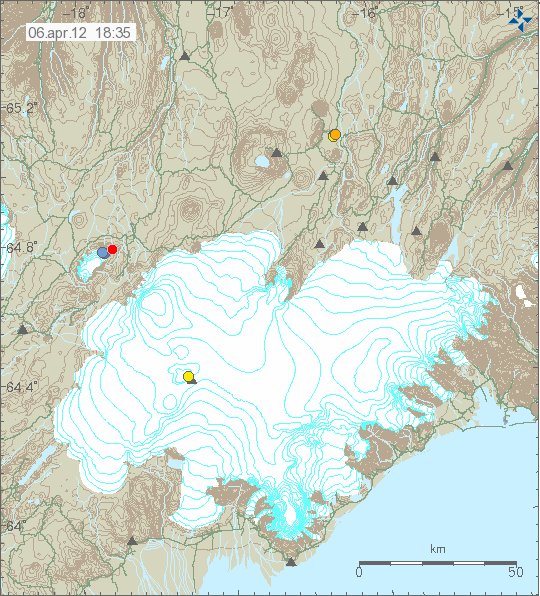
Activity in Askja volcano in the year 2011. This activity took place on 05.05.2011 at 16:25 UTC. Copyright of this picture belongs to Iceland Meteorological Office.

At the moment there is nothing that suggest eruption is imminent. But current progress in Askja volcano is something to keep an watch on. But it is also clear that current status in Askja volcano is changing fast. So while there is nothing to suggest a eruption at the moment, it might change without warning in Askja volcano.

Pictures of Askja lake.

Askja lake 12 June 2011.
Picture of Askja lake (32 months ago according to flickr.)

More on Askja lake sudden warming up

Few more news have appeared about the sudden warming of Askja volcano caldera lake. From what I this news say. It seems that this sudden melt of ice in Askja lake did start in beginning of March, by the end of March the lake had gone completely ice free. This is highly unusual and is not known to have happened before. This increase in hydro-thermal activity seems to be located at the bottom of the lake. But so far there is no new change around Askja lake. But it was reported yesterday that known hydro-thermal areas in Askja volcano where well active. It is now being reported that Askja lake got ice-free over period of two weeks so. But that is highly unusual and fast change in Askja lake.

Earthquake activity has not been above background level in Askja volcano so far. But this increase in hydro-thermal activity is interesting from geological point of view, and is the most clear sign that Askja volcano is preparing for a eruption. But there have been earthquakes taking place in Askja volcano. But as I sad yesterday. There have been few earthquakes in Askja volcano during past few months. Askja lake is about 1000 meters above the sea level. This means that once ice settles the lake in December it normally lasts until mid July. But the lake is self is normally up to 22C warm. So the warm increase

If anyone is going to Askja volcano. It is now official advice that people how are travelling in this area not to into Víti lake, or into Askja lake due to risk of dangerous gases that might be coming up from the ground. If you have no special reason going to Askja volcano, you should not go there at this point due to the changes in the volcano. As at this moment it is unknown what exactly is creating this changes in the Askja lake, and possibly nearby hydro-thermal areas.

University of Iceland and Iceland Meteorological Office are going to go after Easter and setup more monitoring hardware and run some test on what might be taking place in Askja volcano.

Update 1: Here is a youtube video by the user gummih that shows how fast Askja lake did thaw during middle of winter.

Icelandic news about this. Use Google translate to make sense of it.

Fylgst með framvindu mála í Öskju (mbl.is)
„Óeðlilegt ástand“ í Öskjuvatni (DV.is)
Fólk fari ekki að Öskjuvatni (mbl.is) – The news with the offical warning about going to Askja lake and Askja volcano.
Vara ferðafólk við Öskjuvatni og Víti (Rúv.is)
Almannavarnir: Ekki fara að Öskju (DV.is)
Óvenjulegt ástand við Öskju (Almannavarnir, Iceland Civil Emergency Authority)
Fólki bent á að fara ekki að Öskju (Vísir.is)

News in English about this

Photos: Iceless Iceland Volcano Lake Causes Speculation (icelandreview.com)

Blog post updated at 18:46 UTC on 04.04.2012.
Blog post updated at 19:12 UTC on 04.04.2012.
Blog post updated at 20:12 UTC on 04.04.2012.
Blog post updated at 01:28 UTC on 05.04.2012.

Minor earthquake activity in Iceland

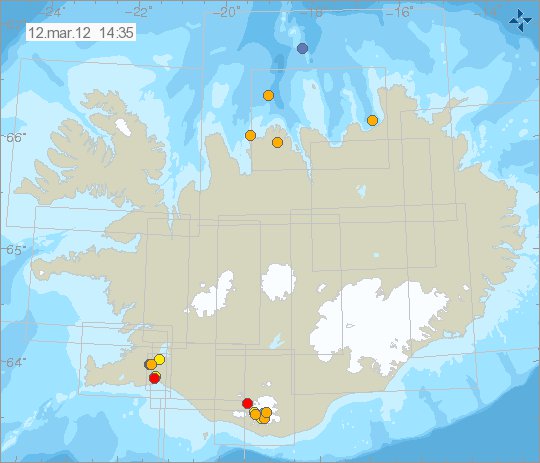
During the past few weeks it has been quiet in Iceland. Really quiet, with almost nothing going on. It is still like that to some extent. So this is just a short overview of the small activity that has been taking place in Iceland during the past 48 hours or so.


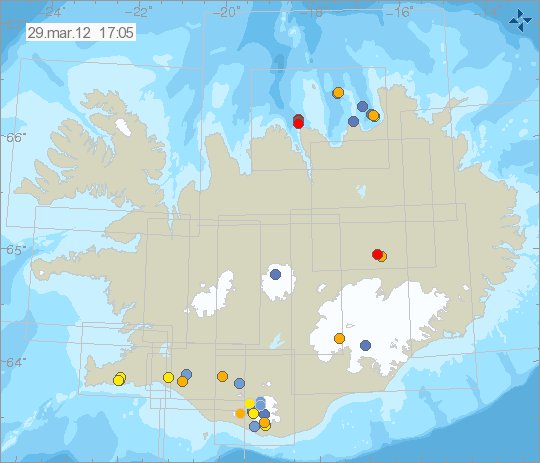
The earthquake activity in Iceland during the past 48 hours. Copyright of this image belongs to Iceland Met Office.

The most activity in the last 48 hours have been on the Reykjanes and on TFZ. But there was an small earthquake swarm in each area. With earthquakes that did not get over ML2.5 in size so far. Two earthquakes where in Askja volcano. One in Grímsfjall volcano fissure system (maybe in Þórðarhyrna volcano).


Earthquake west of Hekla volcano, in the SISZ. This picture is released under Creative Common Licencee. See the licence page for more detail.

Katla volcano

During this winter. Katla volcano has been quiet. This is somewhat normal, as more snow means more ice-mass on top of the volcano. But now that has started to melt a little and that means less ice-mass on top of the volcano. That could mean more activity in Katla volcnao during the next few weeks. So far however the activity remains small and there are no special earthquakes to report.


Earthquake activity in Katla volcano, on this picture earthquake activity west of Hekla volcano can also been seen here. Copyright of this image belongs to Iceland Met Office.

The earthquakes west of Hekla volcano belong to the SISZ fault area. Not Hekla volcano it self. What is also interesting is the earthquake activity in south part of Katla volcano. In area outside of the glacier. This are small earthquakes, that do not appear on my geophone. Even if they are close to it. I am unsure what this means for the future. But it is worth keeping an eye on it.

Grímsfjall volcano continues to prepare for a new eruption

As I did mention in a blog post from 16. January 2012. Grímsfjall volcano is preparing for a new eruption. That progress has not slowed down at all. I am rather sure that the eruption prepare progress in Grímsfjall volcano has sped up. But this is nothing confirmed at the moment. I am just noticing slow increase in earthquakes from Grímsfjall volcano.


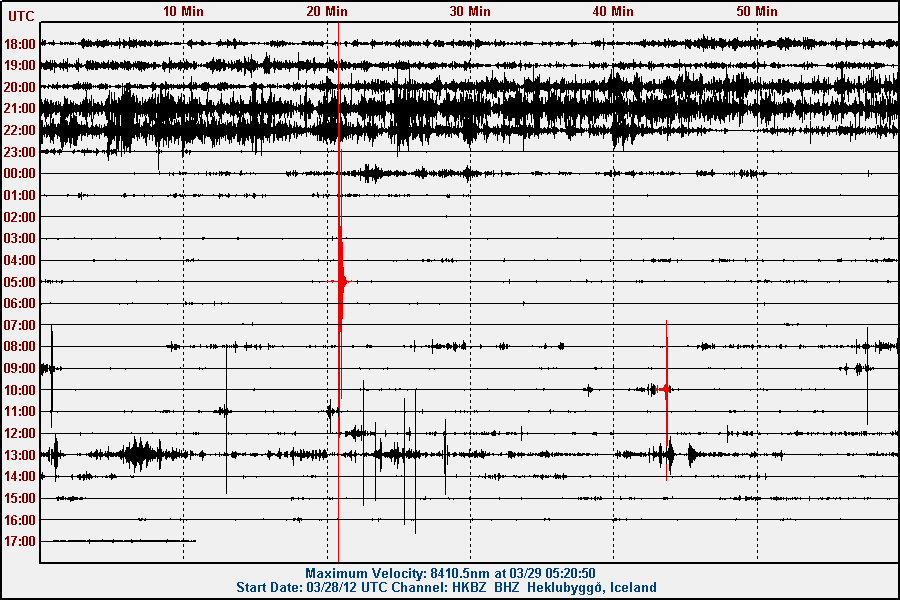
Today’s activity in Grímsfjall volcano. Copyright of this picture belongs to Iceland Met Office.


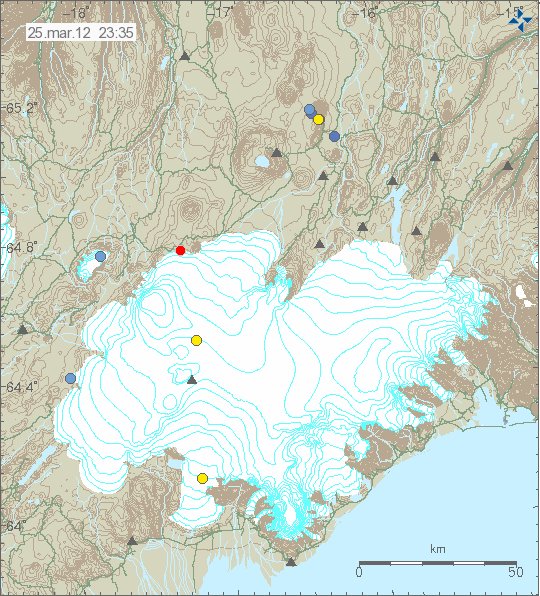
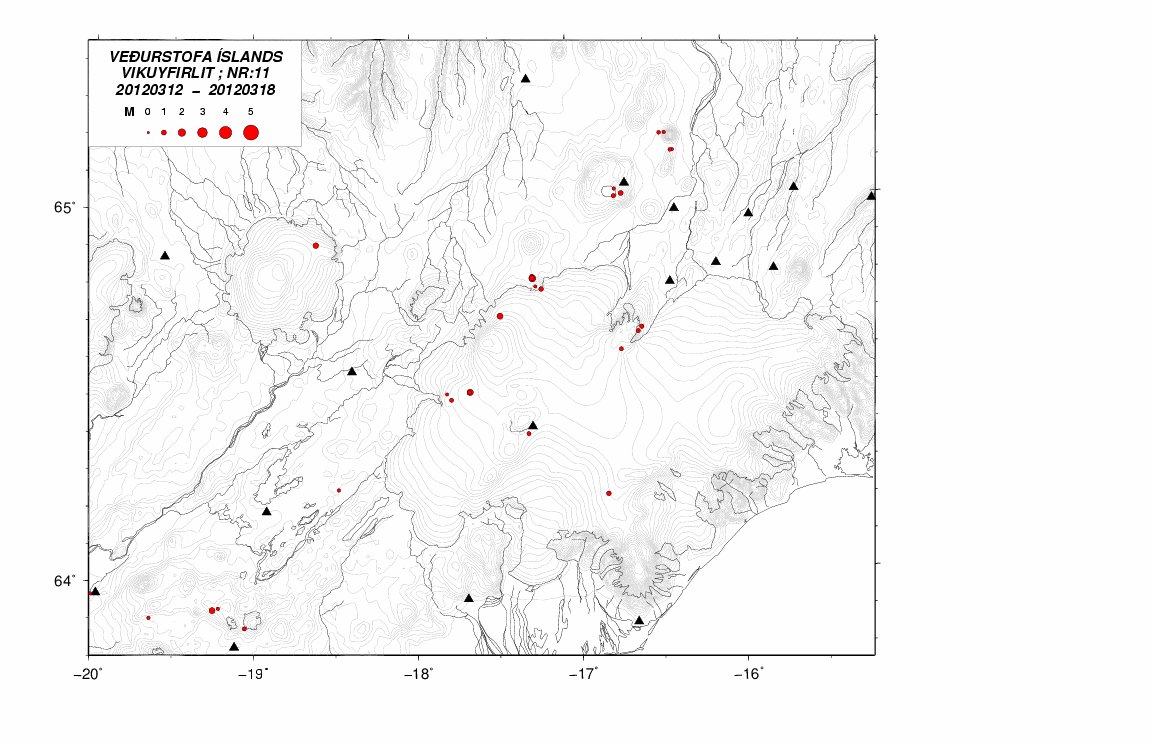
Grímsfjall volcano activity in Week 11 2012. Copyright of this picture belongs to Iceland Met Office.


Grímsfjall volcano activity in Week 12 2012. Copyright of this picture belongs to Iceland Met Office.

It is impossible to know for sure when next eruption starts in Grímsfjall volcano. But at the current time, the clock is ticking down faster then it did before in my opinion. As is known from history. Grímsfjall volcano has erupted sometimes the year after. Even after a big eruption. As was the case last year (2011), when it had the largest eruption in 140 years.

Strong earthquake in Mexico, early size is estimated at Mw7.6 (EMSC)

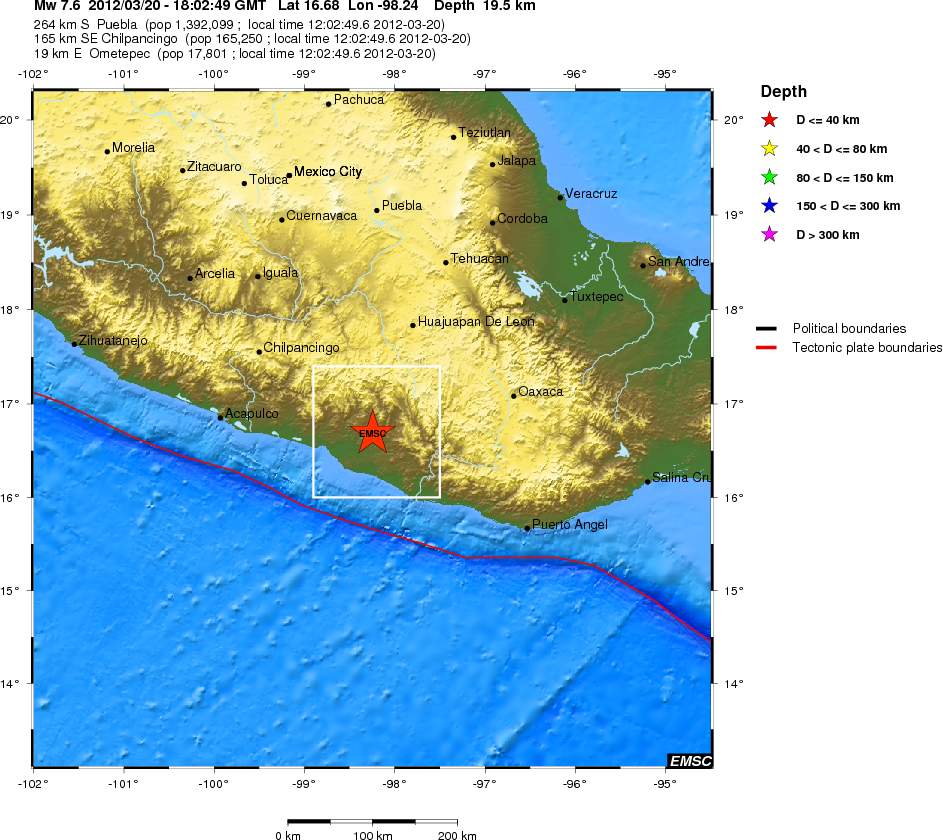
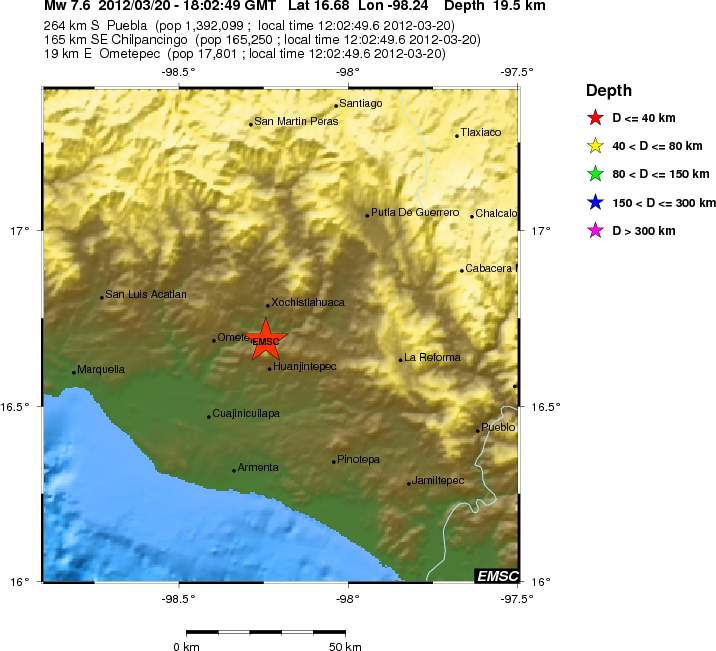
At 18:02 UTC there was an earthquake with the size of Mw7.6, it had the depth of 20 km according to EMSC. This size estimate is based on early data and is a subject to a change.


Regional view of the earthquake according to EMSC. This might change as the earthquake data is reviewed by EMSC and USGS. Copyright of this picture belongs to EMSC.


Local view of this earthquake according to EMSC. This might change as EMSC reviewed by EMSC and USGS. Copyright of this picture belongs to EMSC.

This earthquake was detected by my geophones. Currently I am unable to publish those traces as my earthquake computer is still offline as I have not yet moved to Denmark. This earthquake also appears clearly on IMO SIL network.

I am going to update this blog post as the information changes.

Continued earthquake activity in El Hierro volcano

While the eruption in El Hierro volcano ended some time ago, there has been an constant earthquake activity ongoing in El Hierro volcano. While this earthquake activity has not been in high volume at the moment. It has been deep. Suggesting that this earthquake activity has its source in inflow of new magma at depth. But it is the depth of those earthquakes it is the clue that magma is flowing again into El Hierro volcano.

This however does not mean that an new eruption is going to happen soon. So far the magma seems to be at the depth of 20 to 10 km and at the moment it is not moving at all. It is impossible to know when or if this magma is going to move at all.

Hydro-thermal zone off the coast of El Hierro Island

In the area where the eruption took place from October 2011 to February 2012. This area now has highly active hydro-thermal area. It is hard to know for sure how long it is going to be active. That depends on many factors. But activity should be noticed for at least next one to two years, possible even longer. But this hydro-thermal area off the coast of El Hierro Island is going to continue to create discoloration of the ocean for some time now. So when discoloration happens, it is not because the eruption has started again. It is because the hydro-thermal area activity is changing or some chemicals are getting mixed into the ocean creating discoloration of it.

Strong earthquake in Japan, small earthquake swarm on Reykjanes Ridge in Iceland and more

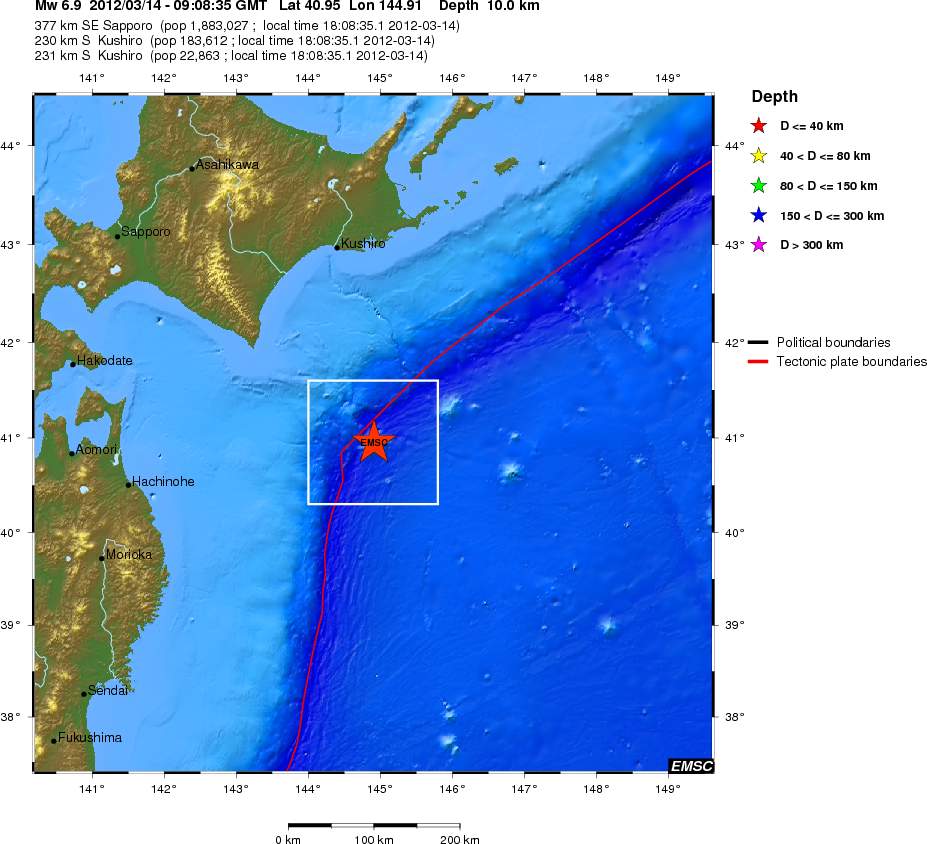
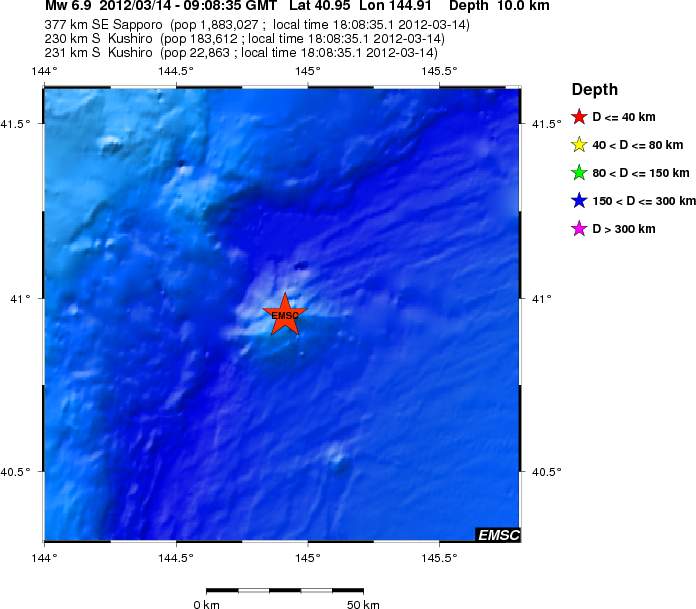
Yesterday (14.03.2012) at 09:08 UTC there was an strong earthquake in Japan. The size of this earthquake was Mw6.9 and it had the depth of 10 km. Local tsunami warning was given out for the area closest to the epicenter of the earthquake. Aftershock activity has been ongoing after the main earthquake. The largest aftershock so far had the size Mw6.0. More details on the earthquake in Japan can be found here at EMSC web page.


Regional view of the earthquake in Japan yesterday morning. Copyright of this image belongs to EMSC.


Local view of this earthquake. It appears to have been in an subduction mountain, or close to it. Copyright of this image belongs to EMSC.

Iceland

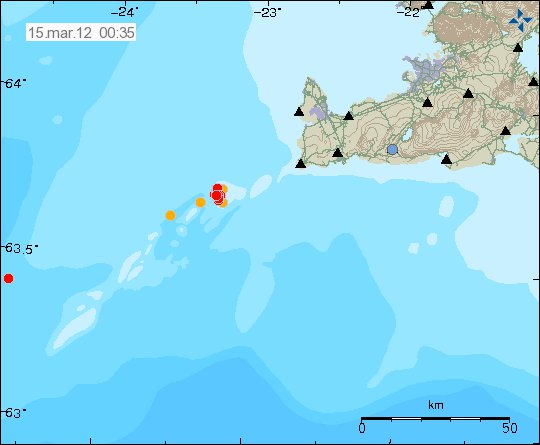
Currently there is an earthquake swarm ongoing on the Reykjanes Ridge off the coast of Iceland. So far the strongest earthquake has reached the size of ML2.7. The depth is about 7 – 16 km. There is an slight chance that his might be an dike intrusion taking place on the Reykjanes Ridge. But this also might just be normal fault movement in the area. For the moment. There is no way to know for sure exactly why this earthquake swarm is taking place.


Reykjanes Ridge earthquake swarm as it is at 00:35 UTC. Copyright of this image belongs to Iceland Met Office.

South Norway

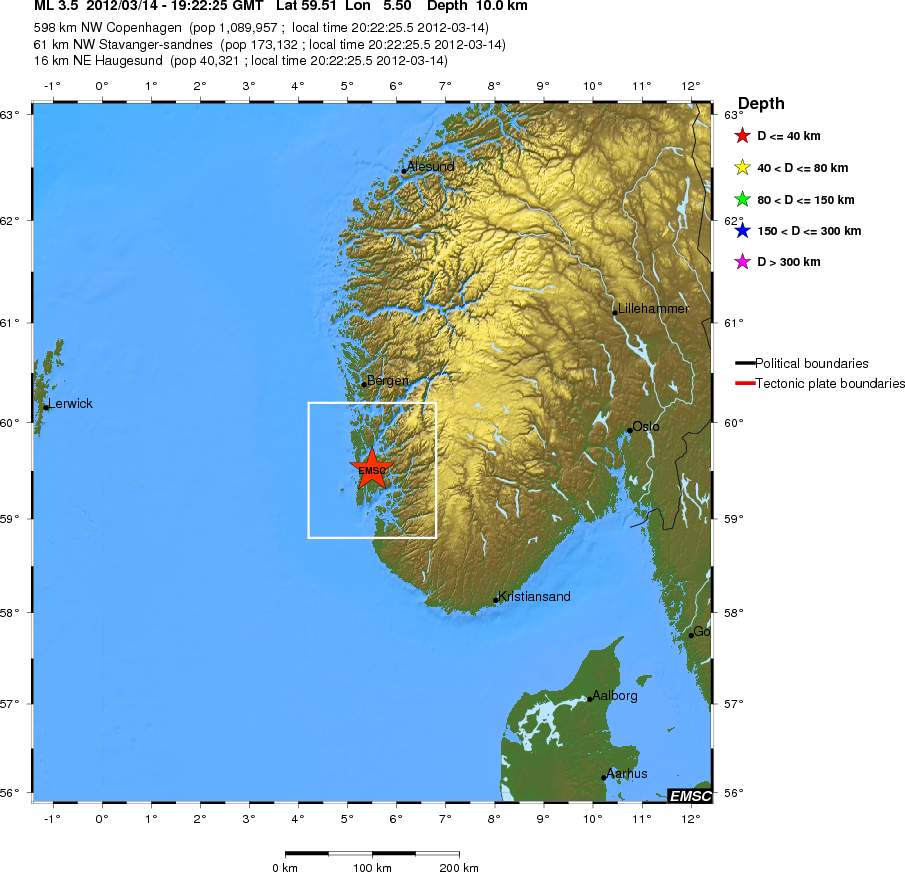
An minor earthquake took place in south Norway at 19:22 UTC. The size of this earthquake was ML3.5 according to EMSC. With the depth of 10 km. This earthquake was clearly felt in Norway according to EMSC and news reports of this earthquake. More details on this earthquake can be found here, on EMSC web page.

The regional view of the earthquake in south Norway. Copyright of this image belongs to EMSC.


Local view of the earthquake. It can clearly be seen here how close it was to several towns in south Norway. Copyright of this image belongs to EMSC.

This earthquake was clearly felt in Norway due the old crust that it took place it. But older crust conducts earthquakes better then new crust. Like the one that can be found in Iceland. That is due to lack of faults in it and the fact it is more dense with sediments then new crust. Earthquake in this area should be expected every 5 to 20 years or so. As there are old fault lines in this area, they sometimes break and create a earthquake.

Norwegian news about this earthquake.

Kanskje noen glass har falt ned fra bordet
Jordskjelv i Rogaland i kveld

New Britain region

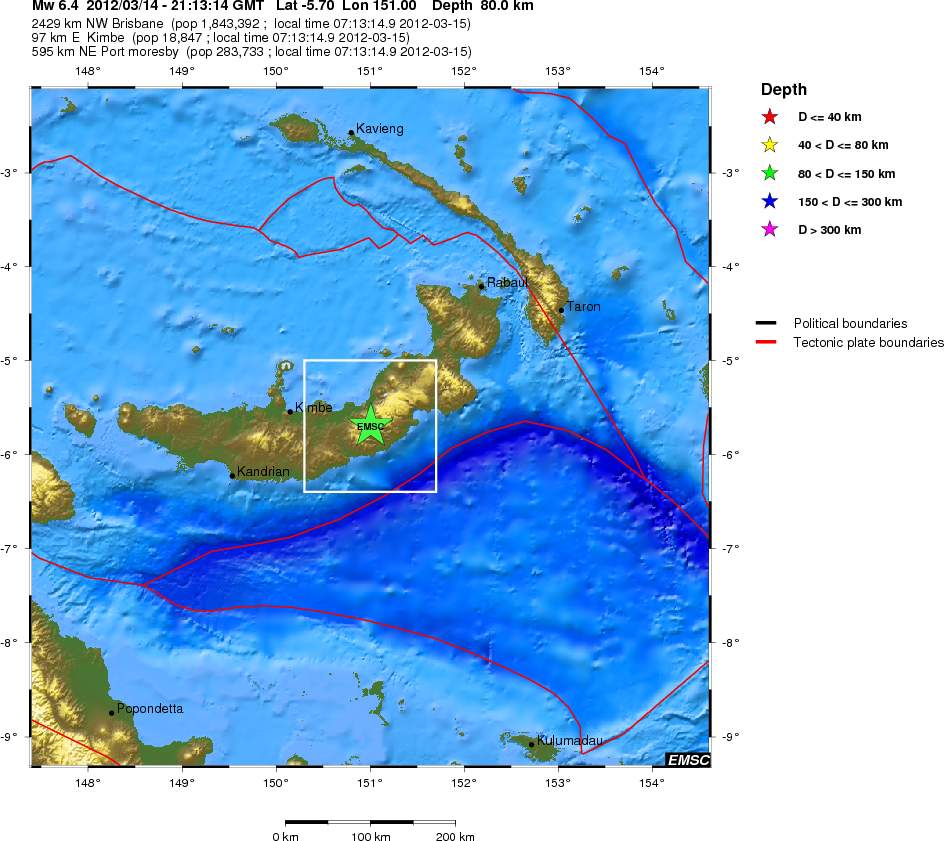
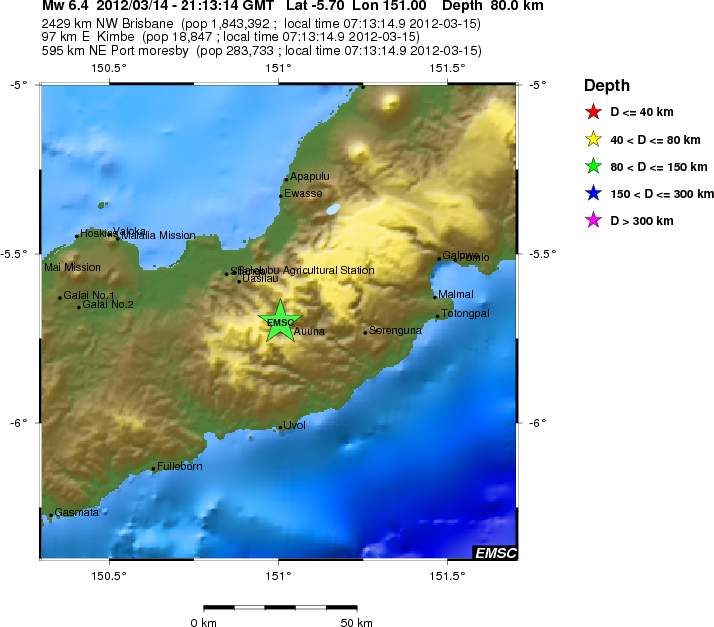
Today at 21:13 UTC there was an Mw6.4 earthquake in New Britain region. The depth of this earthquake was 80 km according to EMSC. I do not know if this earthquake was felt or not. It at least has not been reported yet.


Regional view of the earthquake from EMSC. Copyright of this image belongs to EMSC.


Local view of the earthquake from ESMC. Copyright of this image belongs to EMSC.

More information about this earthquake can be found here, on EMSC web page.

Other

I am sorry for late post. I was flying back to Iceland today. It took awhile. I also had to do other things this evening before I could write about the most recent activity yesterday. This is going also going to happen later when I move back to Denmark. But I am going to post more details on that later.

Blog post updated at 12:11 UTC on 15.03.2012. Location of the earthquake in Norway was fixed.

Minor earthquake activity in Iceland

There isn’t a lot taking place in Iceland at the moment. This is somewhat down to stormy weather in Iceland during the past few days and weeks. As strong storms reduce the sensitive of the Iceland Meteorological Office SIL network.


Quiet Iceland. Copyright of this picture belongs to Iceland Met Office.

Activity in Iceland happens in jumps. Between high activity episodes there are long episodes of low to none activity at all in Iceland. This period of low activity are different in length. Some can last for few weeks. While others can last for many years and up to thousands of years.

Global activity

Global earthquake activity is slow this days. Few earthquakes over Mw6.0 in size. The activity for earthquakes smaller then Mw6.0 in size is about the same as normally. Volcano activity seems to be about normal. But it is hard to know that for sure as reports appear late on global volcano activity.

Strong earthquake in Vanuatu yesterday

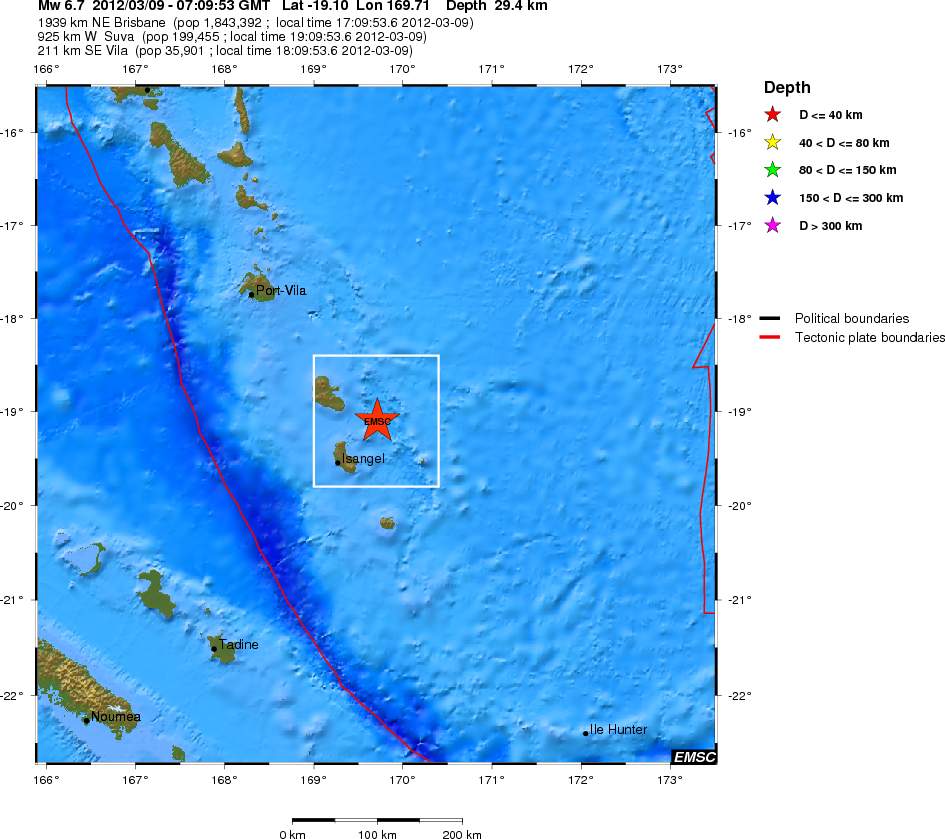
Yesterday there was an Mw6.7 earthquake close to the Vanuatu Islands. The depth of this earthquake was 29 km. I do not know if was felt or not. But no report have appeared that suggest that any damage was done from this earthquake. More information about this earthquake can be found here, on EMSC web page. This earthquake size is known as strong according to the Richter scale (Wiki link).


The earthquake regional view from EMSC. Copyright of this picture belongs to EMSC.


The local view of the earthquake according to EMSC.Copyright of this picture belongs to EMSC.

This earthquake is among the strongest ones in past several weeks. But it has been rather quiet in earthquakes all over the globe during past few weeks. While volcano activity has remained about the same during the same period (but I do little to report on it at current time due to lack of time and I not yet know how to gets the report in decent time).

Analysis of the Helgafell mountain earthquake on Reykjanes

Icelandic Met Office has posted an interesting analysis of the last weeks earthquake on the Reykjanes. But this earthquakes where connected to Krýsuvík volcano activity. By relocating the earthquakes, it is possible for Iceland Met Office to see better how long and how deep the fault that created this earthquakes is. In this case, it was around 2 km long and the movement was east-west, like the one found on SISZ.


The re-located earthquakes. The green ones are normal locations, the orange ones are re-located earthquakes. Copyright of this image belongs to Iceland Met Office.

The orange ones are re-located using relative locations. I am not sure how this technique works. But it often gives better image on what is going on with the earthquakes. Both in terms of the fissure making the earthquakes and the depth where they are taking place.

The fissure in question was on N-S axes and is inclined about 70° in west direction. According to IMO, the aftershocks suggest that movement of this fissure was right slip, along with minor drop in it. That means this according to IMO. The west part of the fissure moved to north and down, while the west part of the fissure moved to the south and little bit upwards. According to IMO. This movements happens in SISZ on large fissures there (when they break).

I am currently waiting for more earthquakes in this area. This activity is not over in my opinion any time soon.

Source of data: Week 9 – Iceland Met Office (Icelandic).

Other: I am sorry for lack of updates. There has not been anything special going on and I have been working on confirming getting an apartment in May 2012.

Blog post updated at 09.03.2012 at 17:37 CET. Fixed spelling error.