Historical eruption of Grímsfjall volcano of the year 1783 to 1785

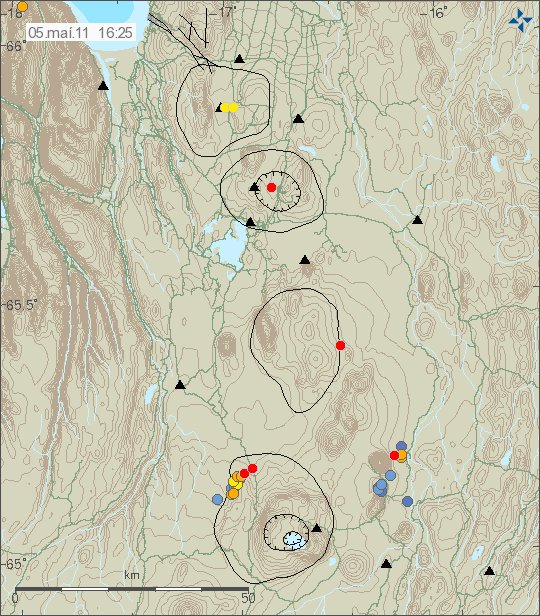
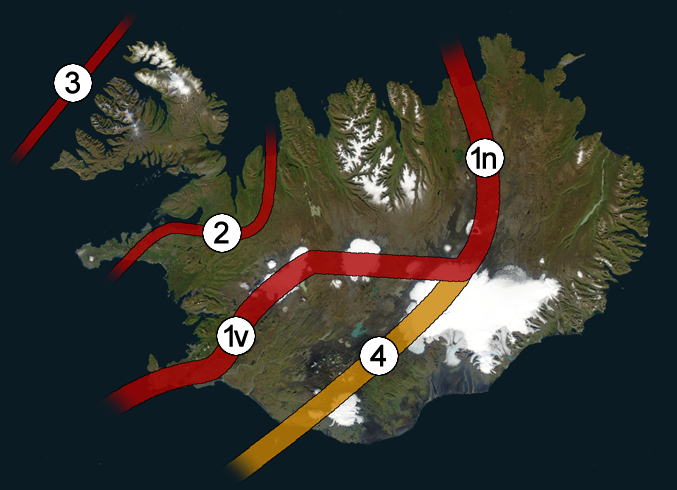
The year 1783 is something that is going to live in historical memory of the Icelandic people for long time to come. The historical memory of Icelanders still remember the eruption of Laki that took place 229 years ago. This eruption is among Iceland biggest eruption in historical times and since Iceland got populated around the year 600 (or around that time, according to new data). It is unclear when the exact eruption started in Grímsfjall volcano and in Þórðarhyrna volcano (a smaller volcano south-west of Grímsfjall volcano, it is inside Grímsfjall volcano fissure swarm). But what is known is that this eruption started sometimes in May.

The eruption started in Grímsfjall volcano it self, it is unclear where exactly it started. Creating a glacier flood that did go down Þjórsá that same month in some part. But was documented that Þjórsá was darker and had worse smell then normally and had more water in it. It was also documented that Skaftá did have more water in it and was darker and had bad smell early spring in Iceland (that means late April or early May). But the glacier flood that must have taken place after an eruption started are not well documented in history best to my knowledge. From what I can read it seems that the eruption of Grímsfjall volcano started in the main volcano (unknown where exactly). The years 1755 and to the year 1785 seems to have been extremely active in terms of volcano activity in Iceland. But that year there was also an eruption on the Reykjanes Ridge that created a short lived Island. It did however only last few months at the best. It is possible that the eruption on the Reykjanes Ridge was in the area of Eldey or close to it. But it is impossible to confirm it for sure.

It is not known when the actual eruption started in Grímsfjall volcano or in Þórðarhyrna volcano. But it has been assumed from what I can gather that Þrórðarhyrna volcano was also erupting during this eruption. But the reason for that might well be due to dike intrusions from Grímsfjall volcano might have started an eruption in Þórðarhyrna volcano. But best to my knowledge, there have not been many eruptions in Þórðarhyrna volcano since the eruption in the year 1783 (or around that time).

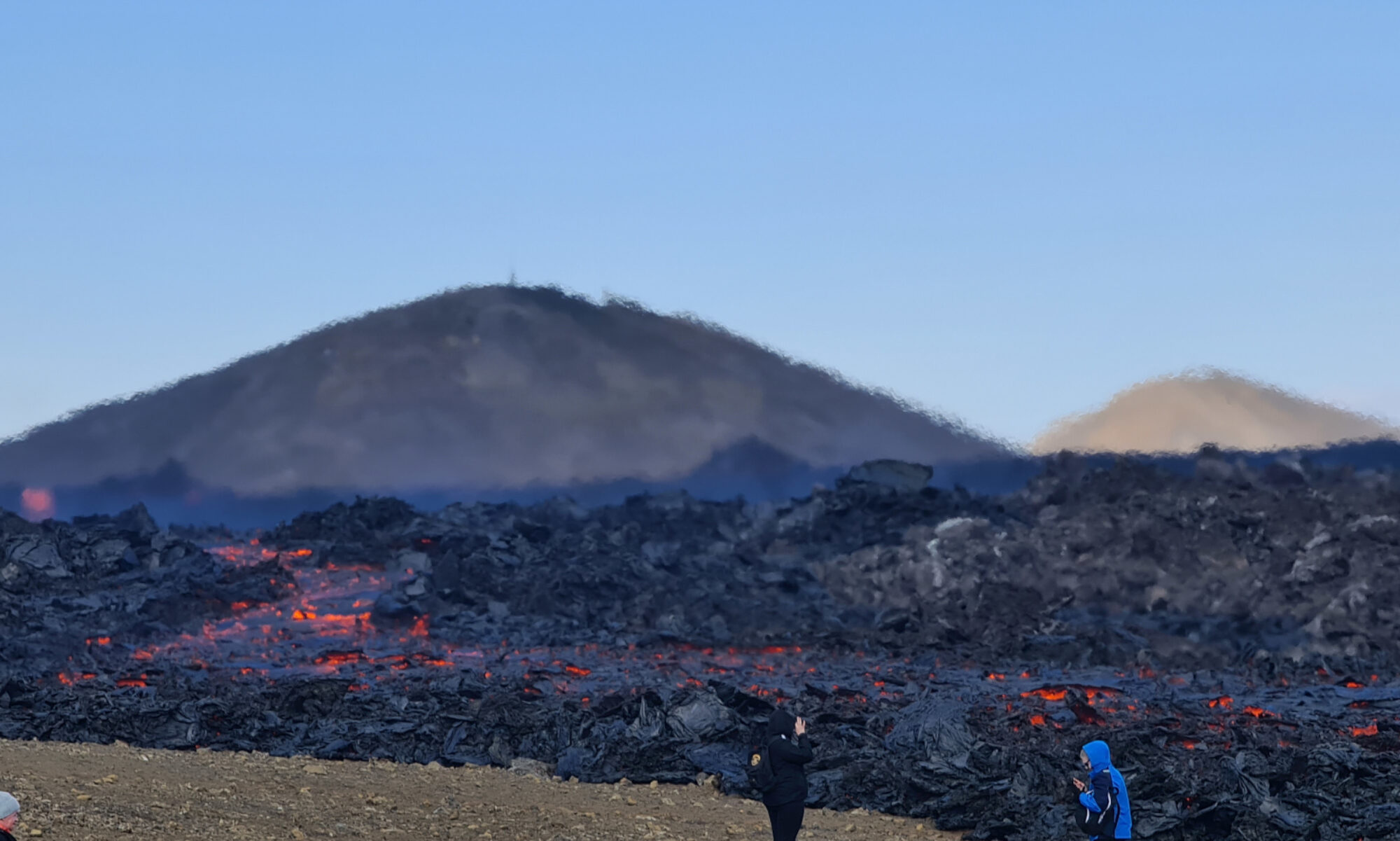
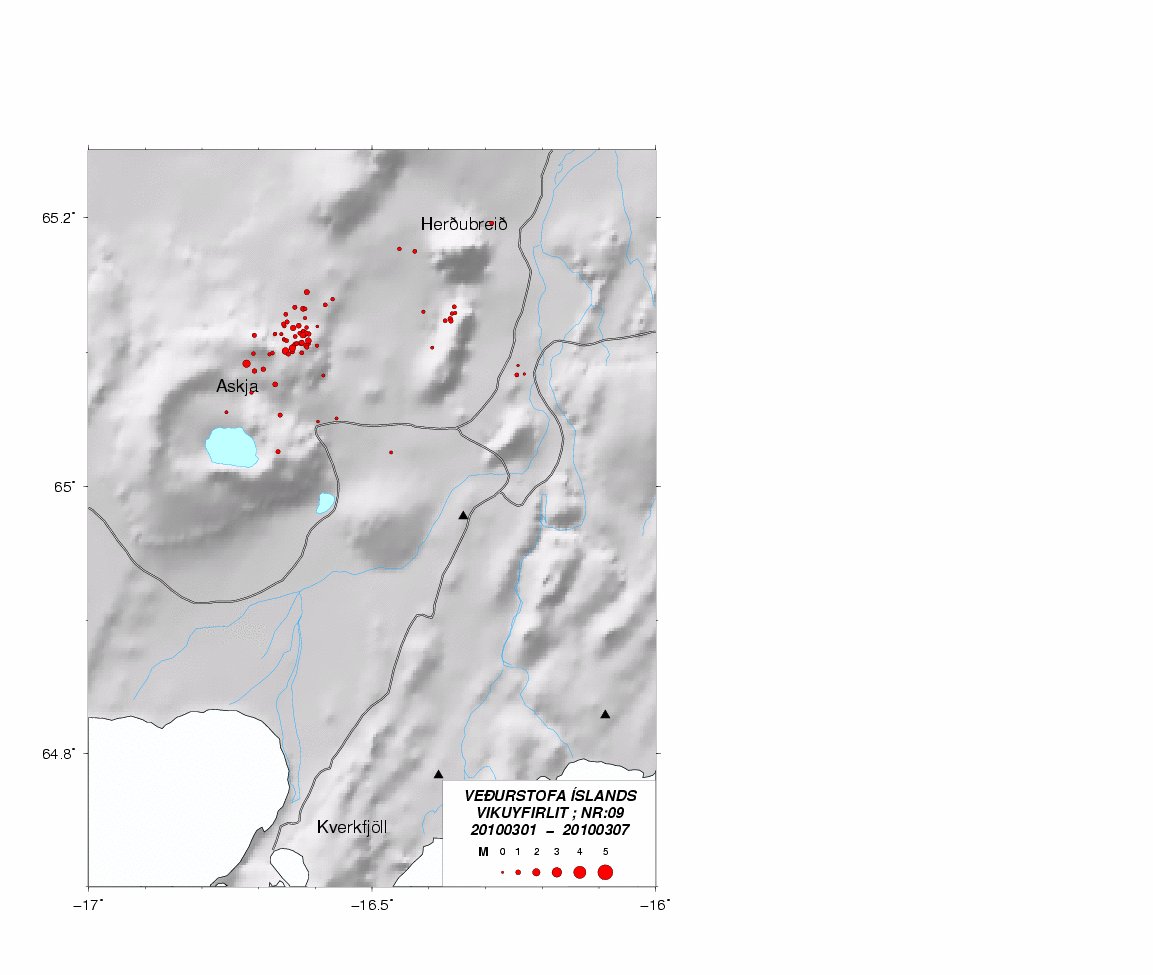
According to documented history, the fissure eruption started around 8. June 1783. This fissure eruption had growing earthquake swarms before it took place. This was due (but they did not know this at the time for obvious reasons). When the eruption started, it started with a large ash cloud that did go down Skaftárhrepp and nearby area. Following this ash cloud was a lot of gas pushing up with the erupted material. But blue haze was reported in historical documents about this eruption. The problem with the carbon-monoxide did not get any better . Given the year this did happen, there are holes in the event as they did happen. But by 12th of June 1783 the lava had already filled several canons at least and had already destroyed a lot of farmland and farms. But it is documented that lava bombs where known to have been found up to 112 km distance from the eruption. The total fissure length is around 25 km long. It is among Iceland longest eruption fissure in historical times. But Askja volcano had an fissure eruption that was around 20 km long in its eruption episode around the year 1875 to the year 1961, when it took a break that is continuing to this day.

Based on historical documents. It seems that this eruption had two phases. The the first one started with an eruption in the south part of what is now the eruption fissure of Laki. The second one was when eruption craters did open up north part of the fissure after several months of eruption on the south part of the eruption fissure. But by that time the eruption had already diminished in strength at the same time, or before that. It is hard to know from historical documentation what actually did happen at this time. But the eruption is believed to have stopped on 26 May 1785.

Many of the eruption craters did make ash, not lava. The ash layers from those craters where up to 2 meters thick at the distance of 500 meters in some areas. It is also believed that the eruption strokes from many of the craters where up to 800 to 1400 meters high when they where at the tallest. During this eruption there was a sour rain, along with other deadly effects that did follow this eruption. It did also happen during this eruption that many animals did die due to ash poisoning, and gas poisoning from the eruption. Just as humans did at this time. But at this time Iceland did not have any functional government that was able to handle this type of natural disaster. The amount of volcanic gases also had effects around northern hemisphere. But this effects did create huge problems in Europe, Canada, U.S and in Russia from best of my knowledge (it might however not be correct).

Many people might believe that after such a big eruption Grímsfjall volcano would stop for a long time. This was not the case. Only 22 years after the major eruption of the year 1783 to 1785 Grímsfjall volcano had an new eruption. This was smaller, only having the VEI scale of 2. But Laki eruption has the VEI scale of 4+. Before the Laki eruption, there had been an other eruption in the year 1774, but it was an minor VEI=2 eruption. Last eruption in Þórðarhyrna and Grímsfjall volcanoes was in the year 1902. That was an VEI=4 eruption that lasted from December 1902 and until January 1904.

For this reasons I classify Grímsfjall volcano (including also Þórðarhyrna volcano) one of the dangerous volcanoes in Iceland. I do think it might be even be more dangerous the Katla volcano all considered. But this is just my personal opinion and nothing else.

Based on following references

Skaftáreldar 1783 (Icelandic)
Grímsvötn (Icelandic)
The eruption that changed Iceland forever (BBC News)

Blog post updated at 01:49 UTC on 22.03.2012.

Going back to being Iceland volcano and earthquake blog from midnight (21.03.2012)

One of the lessons in life is that something you do does not always work, this is what I learn from when it comes down it. Sometimes it does not work first time around, sometimes it does work second time around. Sometimes it just does not work at all. My change in focus on this blog falls into the last group. It does not seems to work in my opinion of my readers. While only few have expressed this opinion to me. I take it seriously. Based on the opinions that I have heard so far. I have come to the following conclusions and made this decision following it.

From midnight UTC time. This blog is going to be renamed back into being Iceland volcano and earthquake blog. This means my focus is only going to be Iceland and nothing else (well, maybe I make an exception or two if it something really interesting) . As has been told here in comments there are other bloggers how cover other parts of the world and do an good job of it.

So from midnight. This blog and the forum is going back to the name “Iceland volcano and earthquake blog”. This also covers the forum. But the change is going to be more dramatic there. As I am going to arrange it in accordance with this change. No posts are going to be deleted, but are going to move around a bit. No blog posts are going to be deleted from this blog do to this name change. It is part of history in my view.

Strong earthquake in Mexico, early size is estimated at Mw7.6 (EMSC)

At 18:02 UTC there was an earthquake with the size of Mw7.6, it had the depth of 20 km according to EMSC. This size estimate is based on early data and is a subject to a change.


Regional view of the earthquake according to EMSC. This might change as the earthquake data is reviewed by EMSC and USGS. Copyright of this picture belongs to EMSC.


Local view of this earthquake according to EMSC. This might change as EMSC reviewed by EMSC and USGS. Copyright of this picture belongs to EMSC.

This earthquake was detected by my geophones. Currently I am unable to publish those traces as my earthquake computer is still offline as I have not yet moved to Denmark. This earthquake also appears clearly on IMO SIL network.

I am going to update this blog post as the information changes.

Quiet period ongoing in geology, except in current erupting volcanoes

Everything seems to be quiet in Iceland and around the world. Nothing major is taking place in regards to earthquakes or volcano activity. So I do not have a lot to report on at current time. If this quiet period continues I am going to write about something in Iceland geological history that I know of. Nothing long, just short and as detailed as I can make it.

Last week volcano activity

Smithsonian/USGS Weekly Volcanic Activity Report

New Activity/Unrest: | Bezymianny, Central Kamchatka (Russia) | Cleveland, Chuginadak Island | Ijen, Eastern Java (Indonesia) | Iliamna, Southwestern Alaska | Lamongan, Eastern Java (Indonesia) | Marapi, Sumatra (Indonesia) | Nevado del Ruiz, Colombia | Tungurahua, Ecuador

Ongoing Activity: | Karymsky, Eastern Kamchatka (Russia) | Kilauea, Hawaii (USA) | Kizimen, Eastern Kamchatka (Russia) | Puyehue-Cordón Caulle, Central Chile | Sakura-jima, Kyushu | Santa María, Guatemala | Shiveluch, Central Kamchatka (Russia) | Villarrica, Central Chile

Rest of this report can be found here, http://www.volcano.si.edu/reports/usgs/

I hope to have more to write on soon. But it is hard to know for how long this quiet time is going to continue.

Continued earthquake activity in El Hierro volcano

While the eruption in El Hierro volcano ended some time ago, there has been an constant earthquake activity ongoing in El Hierro volcano. While this earthquake activity has not been in high volume at the moment. It has been deep. Suggesting that this earthquake activity has its source in inflow of new magma at depth. But it is the depth of those earthquakes it is the clue that magma is flowing again into El Hierro volcano.

This however does not mean that an new eruption is going to happen soon. So far the magma seems to be at the depth of 20 to 10 km and at the moment it is not moving at all. It is impossible to know when or if this magma is going to move at all.

Hydro-thermal zone off the coast of El Hierro Island

In the area where the eruption took place from October 2011 to February 2012. This area now has highly active hydro-thermal area. It is hard to know for sure how long it is going to be active. That depends on many factors. But activity should be noticed for at least next one to two years, possible even longer. But this hydro-thermal area off the coast of El Hierro Island is going to continue to create discoloration of the ocean for some time now. So when discoloration happens, it is not because the eruption has started again. It is because the hydro-thermal area activity is changing or some chemicals are getting mixed into the ocean creating discoloration of it.

Strong earthquake in Japan, small earthquake swarm on Reykjanes Ridge in Iceland and more

Yesterday (14.03.2012) at 09:08 UTC there was an strong earthquake in Japan. The size of this earthquake was Mw6.9 and it had the depth of 10 km. Local tsunami warning was given out for the area closest to the epicenter of the earthquake. Aftershock activity has been ongoing after the main earthquake. The largest aftershock so far had the size Mw6.0. More details on the earthquake in Japan can be found here at EMSC web page.


Regional view of the earthquake in Japan yesterday morning. Copyright of this image belongs to EMSC.


Local view of this earthquake. It appears to have been in an subduction mountain, or close to it. Copyright of this image belongs to EMSC.

Iceland

Currently there is an earthquake swarm ongoing on the Reykjanes Ridge off the coast of Iceland. So far the strongest earthquake has reached the size of ML2.7. The depth is about 7 – 16 km. There is an slight chance that his might be an dike intrusion taking place on the Reykjanes Ridge. But this also might just be normal fault movement in the area. For the moment. There is no way to know for sure exactly why this earthquake swarm is taking place.


Reykjanes Ridge earthquake swarm as it is at 00:35 UTC. Copyright of this image belongs to Iceland Met Office.

South Norway

An minor earthquake took place in south Norway at 19:22 UTC. The size of this earthquake was ML3.5 according to EMSC. With the depth of 10 km. This earthquake was clearly felt in Norway according to EMSC and news reports of this earthquake. More details on this earthquake can be found here, on EMSC web page.

The regional view of the earthquake in south Norway. Copyright of this image belongs to EMSC.


Local view of the earthquake. It can clearly be seen here how close it was to several towns in south Norway. Copyright of this image belongs to EMSC.

This earthquake was clearly felt in Norway due the old crust that it took place it. But older crust conducts earthquakes better then new crust. Like the one that can be found in Iceland. That is due to lack of faults in it and the fact it is more dense with sediments then new crust. Earthquake in this area should be expected every 5 to 20 years or so. As there are old fault lines in this area, they sometimes break and create a earthquake.

Norwegian news about this earthquake.

Kanskje noen glass har falt ned fra bordet
Jordskjelv i Rogaland i kveld

New Britain region

Today at 21:13 UTC there was an Mw6.4 earthquake in New Britain region. The depth of this earthquake was 80 km according to EMSC. I do not know if this earthquake was felt or not. It at least has not been reported yet.


Regional view of the earthquake from EMSC. Copyright of this image belongs to EMSC.


Local view of the earthquake from ESMC. Copyright of this image belongs to EMSC.

More information about this earthquake can be found here, on EMSC web page.

Other

I am sorry for late post. I was flying back to Iceland today. It took awhile. I also had to do other things this evening before I could write about the most recent activity yesterday. This is going also going to happen later when I move back to Denmark. But I am going to post more details on that later.

Blog post updated at 12:11 UTC on 15.03.2012. Location of the earthquake in Norway was fixed.

Minor earthquake activity in Iceland

There isn’t a lot taking place in Iceland at the moment. This is somewhat down to stormy weather in Iceland during the past few days and weeks. As strong storms reduce the sensitive of the Iceland Meteorological Office SIL network.


Quiet Iceland. Copyright of this picture belongs to Iceland Met Office.

Activity in Iceland happens in jumps. Between high activity episodes there are long episodes of low to none activity at all in Iceland. This period of low activity are different in length. Some can last for few weeks. While others can last for many years and up to thousands of years.

Global activity

Global earthquake activity is slow this days. Few earthquakes over Mw6.0 in size. The activity for earthquakes smaller then Mw6.0 in size is about the same as normally. Volcano activity seems to be about normal. But it is hard to know that for sure as reports appear late on global volcano activity.

Strong earthquake in Vanuatu yesterday

Yesterday there was an Mw6.7 earthquake close to the Vanuatu Islands. The depth of this earthquake was 29 km. I do not know if was felt or not. But no report have appeared that suggest that any damage was done from this earthquake. More information about this earthquake can be found here, on EMSC web page. This earthquake size is known as strong according to the Richter scale (Wiki link).


The earthquake regional view from EMSC. Copyright of this picture belongs to EMSC.


The local view of the earthquake according to EMSC.Copyright of this picture belongs to EMSC.

This earthquake is among the strongest ones in past several weeks. But it has been rather quiet in earthquakes all over the globe during past few weeks. While volcano activity has remained about the same during the same period (but I do little to report on it at current time due to lack of time and I not yet know how to gets the report in decent time).

Analysis of the Helgafell mountain earthquake on Reykjanes

Icelandic Met Office has posted an interesting analysis of the last weeks earthquake on the Reykjanes. But this earthquakes where connected to Krýsuvík volcano activity. By relocating the earthquakes, it is possible for Iceland Met Office to see better how long and how deep the fault that created this earthquakes is. In this case, it was around 2 km long and the movement was east-west, like the one found on SISZ.


The re-located earthquakes. The green ones are normal locations, the orange ones are re-located earthquakes. Copyright of this image belongs to Iceland Met Office.

The orange ones are re-located using relative locations. I am not sure how this technique works. But it often gives better image on what is going on with the earthquakes. Both in terms of the fissure making the earthquakes and the depth where they are taking place.

The fissure in question was on N-S axes and is inclined about 70° in west direction. According to IMO, the aftershocks suggest that movement of this fissure was right slip, along with minor drop in it. That means this according to IMO. The west part of the fissure moved to north and down, while the west part of the fissure moved to the south and little bit upwards. According to IMO. This movements happens in SISZ on large fissures there (when they break).

I am currently waiting for more earthquakes in this area. This activity is not over in my opinion any time soon.

Source of data: Week 9 – Iceland Met Office (Icelandic).

Other: I am sorry for lack of updates. There has not been anything special going on and I have been working on confirming getting an apartment in May 2012.

Blog post updated at 09.03.2012 at 17:37 CET. Fixed spelling error.

Web site news for March 2012 [Updated]

This are the web site news for March 2012.

More pictures planned for this blog

I am planning more pictures and graphic stuff for this blog. How exactly I am going to do so is bit unclear at this moment. But this is an idea that I am currently working on.

Infolinks

Infolinks is an advertiser that inserts links into web pages by links. I am considering setting it up here to increase my income from this web site (being always broke is getting really old for me, more on that little later). But I want to know what the readers feel about such change. But the ads would insert them self into the text automatically based on keywords. Some people find this annoying. But the ads would only show them self if the links are hovered over.

Broke again, need help

I am travelling in Denmark at the moment and I am waiting for an apartment. The downside of this the fact that I am yet to pay my hosting bill of 800DKK for this month. But I did just send donations of 1102 DKK to my bank account from paypal. But give that my bank account has an -407DKK already. It means that there are only going to be around 695DKK available when the bill is due. I might be able to run an overdraft for few days without actually having one as I am doing now. But that is not welcomed by the bank that I am with.

What did create this situation is that I had to buy an air-plain ticket to Iceland both ways. This air-plain ticket did cost me 2394 DKK and when I did buy it. I did think that my balance was around 4000 DKK. Sadly, that was not the case and I was 2000 DKK less then I did was expecting. So now I am broke, with an air-plain ticket to Iceland and no good way to surviving the month without having to cut into my savings before I move to Denmark. But that is something I really do not want to do. As it would delay me on several things for many more months to come.

I also have to pay for glasses (I am going to pay for them slowly over several months (12 or 24 months)). That is not the big problem. As that is all accounted for properly and in an good plan.

What was not planned was getting broke now. This is also what I hate about my life at current time. I can’t move one inch with out getting broke or to have some money problems in the short term or the long time.

If anyone is willing to help me in this problem. It is possible to donate with paypal or directly to my bank account with SWIFT number. I really hate to ask for this. But I am having big problem now. I am planning some emergency plans so that I can pay the hosting bill on time. But that is going to mean that I have to cut into my saving a little bit to keep this web site up and running.

My current status is due to small income from the social welfare. But my income is only 151000 ISK. But that is at current exchange rate only 6713 DKK, 903€, 1.192$. It is my opinion that nobody should live on this small amount every month. But sadly this is what I have to deal with at current time, due to small traffic to my web page and that fact I have not been able to publish any book as of yet.

Thanks to everyone who support me!

Update 1: I am moving back to shared hosting soon as possible. I do this to cut down cost. As current lack of traffic does not support me buying dedicated hosting. But I need no less then 5000 pages loads pr day in order to support me buying dedicated hosting package. I am going to announce it when the move takes place.

Update 2: I have changed my mind. I am going to keep shared hosting. It is going to be worth it in the long run I think. What I did yesterday was an rather typical response due to the fact that I am most of the time broke. Something that I have to stop doing.

Update 3: Here is the traffic data for the years 2010 until 2012 (today). This gives an good idea of the traffic to this web site and how it spikes around earthquakes or volcano activity in Iceland.


Traffic of this web site since 2010 until today (year 2012). Picture is from Statcounter.com. I am unclear on copyright on this image at the moment.

Blog post updated earlier today.
Blog post updated at 01:24 CET on 06.03.2012.

Blog post updated at 09:54 CET on 06.03.2012.
Blog post updated at 17:51 CET on 06.03.2012.