Inflation starts again in Eyjafjallajökull volcano

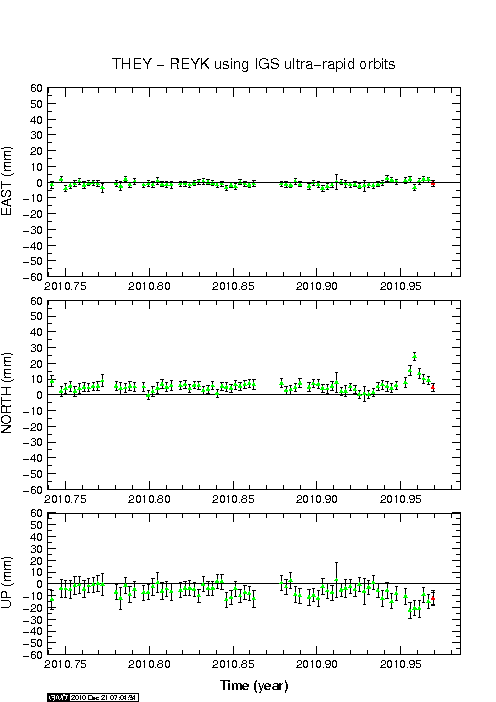
After a few months of a period of stability in Eyjafjallajökull volcano after the eruption ended on the 28th of May 2010. There seems to be more instability starting again in Eyjafjallajökull volcano. This instability can so far only be seen on GPS sensors around the volcano. So far the inflation that is starting at medium rate, about 5mm on every 24 hours or so. This is clear when a early results (not error corrected) are checked from Icelandic Met Office GPS network. The trigger for the current instability appears to be a sharp deflation that took place in Eyjafjallajökull volcano few days ago.


Picture is from Icelandic Met Office, copyright of this picture belongs to them. Click on the picture for higher resolution.

Automatic GPS data from 21st of December 2010. The GPS station name is THEY and is on the south slope of Eyjafjallajökull volcano. The sharp deflation appears clearly on the GPS automatic data (not error corrected) and is followed by a sharp inflation period that is currently ongoing. I got a email from a expert that tells me that volcano ash can interfere with the GPS signal. But this does not change my opinion on that a inflation is about to start in Eyjafjallajökull volcano.

It currently remains unclear if this inflation period in Eyjafjallajökull volcano is going to continue. At current time the inflation in Eyjafjallajökull volcano is going to continue. It is also clear that today Eyjafjallajökull volcano is few weeks from re-starting the eruption, as it has not inflated enough to do so. But what is unclear is if this inflation and inflow of new magma under Eyjafjallajökull volcano is going to move around older magma that currently is higher up in the Eyjafjallajökull volcano plumbing after the eruption started earlier this year. For the moment the only that can be done is to wait and see what happens next.

Wikipedia articles on Eyjafjallajökull volcano

Eyjafjallajökull
2010 eruptions of Eyjafjallajökull

Text updated at 23:49 UTC on 21st of December 2010.

Eyjafjallajökull volcano ash moves in the strong wind

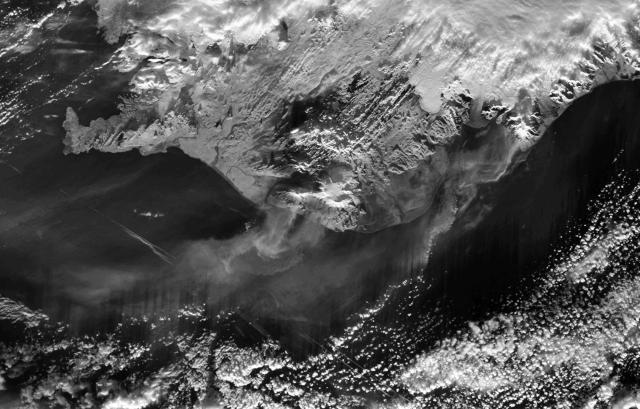
In the news today here in Iceland there is a small news about the volcano ash moving from the strong northern wind that is currently taking place in Iceland. Today NASA took a good picture from this in orbit. This ash is still creating a lot of issues for people in the area affect by the ash cloud.

Picture NASA. This picture is suppose to be from today. I have not been able to find the full size picture of this ash moving from the wind out to the ocean. You can also see a lot of sand moving because of the wind out to the ocean as well.

Icelandic news about this. Use Google Translate.

Aska fýkur frá Eyjafjallajökli (mbl.is)

Krísuvík volcano / Kleifarvatn lake static image

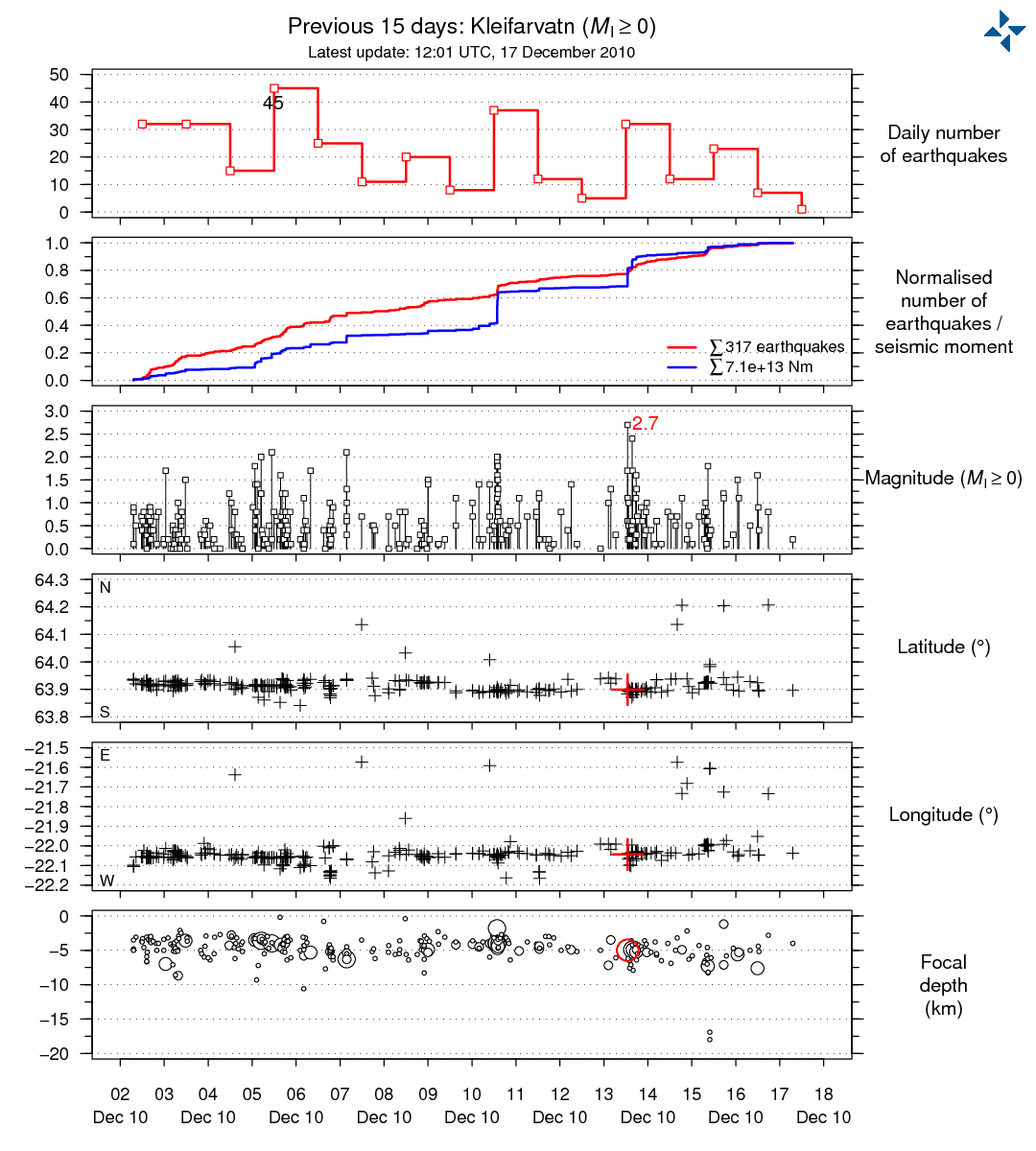
Here is a image from Icelandic Met Office about the earthquakes that have been taking place in Krísuvík volcano over the past few weeks. This plot shows the latest 15 days.

This image is from Icelandic Met Office. Copyright belongs to them. The original copy can be found here. Click on the image for full resolution.

The Hekla volcano system earthquake last night

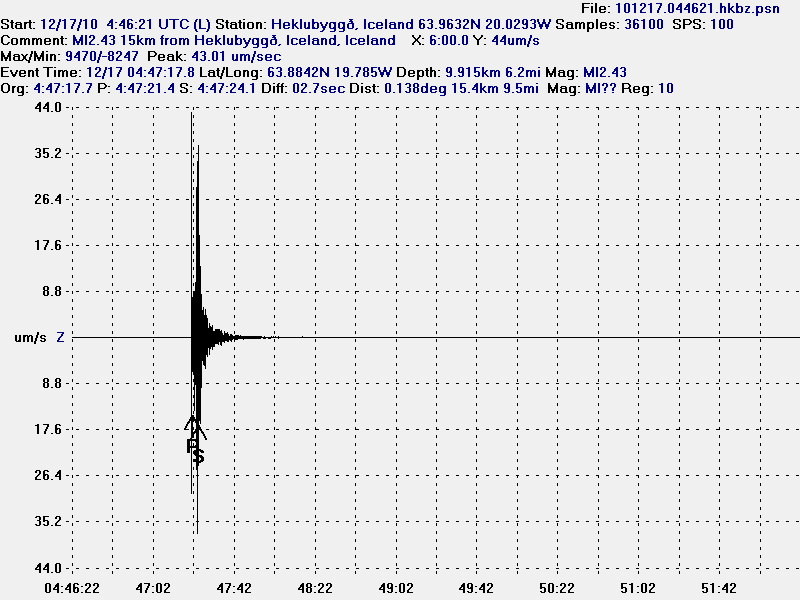
Here is a high resolution image of the Hekla volcano system earthquake yesterday. The earthquake was located in south-east part of the Hekla volcano system. But that area has been having earthquakes for few months now, starting few years ago. I am unclear on why this is happening in Hekla volcano system. But sometimes Hekla volcano erupts in fissures (crater row eruptions). But not from the main volcano.

This earthquake was small like the earthquakes before him, registering only at ML2.43. The depth was 10 km. It was only 15.4 km away from my geophone. But that is the reason why it appear so clearly on my geophone.

Small weather news

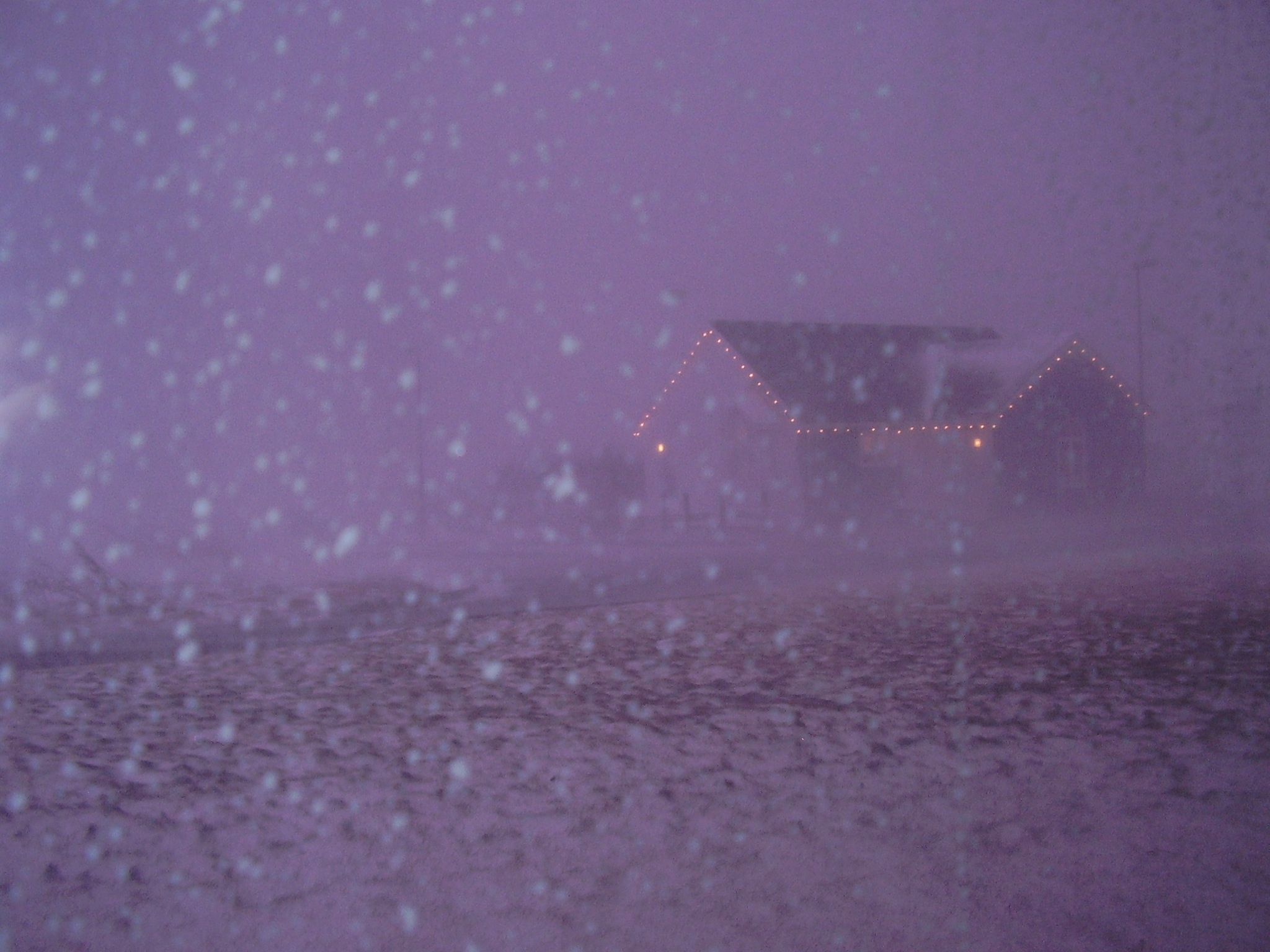
Here is the view from my apartment in Hvammstangi earlier today. This is due to a storm that is coming from the north of Iceland. The winds are strong and the snow is on the move due that. The frost is only about -3C. But with the wind it goes down to -20 to -40C.

Click on both pictures to get full resolution.

Sadly, no new geophone station at Thorgrimsstadir today

Due to technical and space issues. I am not going to setup a new geophone station at Thorgrimsstadir today. Currently I am looking for a new location for the new geophone station in the area of Hvammstangi with the people I know that might be interested in housing this type of hardware.

I however hope to get a geophone station at Thorgrimsstadir up and running in about one year time or so. At least I hope so.

A ML3.9 earthquakes happens close to Grímey Island

According to the automatic SIL system that IMO runs there was a ML3.9 magnitude earthquake about 18.3 km north of the island Grímsey, this earthquake happened at 09:00 UTC. The automatic depth was 14.7 km. This numbers are expected to be changed as the earthquake get reviewed by seismologist at Icelandic Met Office.

No damage is expected from this earthquake. But there is a good chance that it might have been felt in Grímsey Island.

A new geophone station added to the webicorder web page

I have added a new geophone station to the webicorder web page. The station name is Þorgrímsstaðir (Thorgrimsstadir). Tomorrow the station is going to it’s correct location. But for the next few hours I am going to run it at home for some testing and set-up proposes. At current time it does not have a GPS clock, so I won’t use the data from it until I have a GPS clock to get both location and time with atom accuracy.

This station is going to replace the Hvammstangi geophone in February 2011. But until Hvammstangi geophone goes off-line I am going to have both station online.

Good chance of Krísuvík volcano eruption in immanent future

I have been viewing data on Krísuvík volcano and what has been happening recently. Out of this checking I have come to a conclusion that a eruption in Krísuvík volcano is going to place in immanent future. When that might happen is impossible to know for sure.

Far as I know there is no written history on the last eruption at Krísuvík volcano that took place in 14th century. Because of this lack of historic witness of the last eruption in Krísuvík volcano it is impossible to know how the Krísuvík volcano is going to behave before it starts erupting.

It is my un-professional opinion that when a eruption starts in Krísuvík volcano we are going to see something like that took place in Krafla volcano when it erupts. Not exactly like Krafla volcano but something along those lines in eruption style. But Krísuvík volcano is going to have Hawaiian type eruption style when it starts erupting. Unless the eruption takes place under water. Then a Surtseyjan style eruption takes place while a water can get into the crater.

Please note that this is a theory that I am working on. It might work out in part or in full. But then again it might be completely wrong and not work at all. If the second option is true, then I am going to start again and make a new idea on what is going on at Krísuvík volcano.

Pictures of Kleifarvatn lake hot springs

I got this pictures in a email from a person how wants to remain nameless. Don’t ask me why, it is just a request that I got with the email and I see no reason not to grand it.

The hot springs at the south end of Kleifarvatn lake hot springs. The hot springs there are not new. But they do get lost when the water level rises in Kleifarvatn lake. When the water level dropped after the year 2000 years in the area this hot springs where for the first time visible to humans.

Click on all the pictures to get a full resolution.

The earthquakes swarm at Krísuvík (close to this area) continues with few breaks it seems.

Earthquake wave forms from Krísuvík volcano earthquake swarm yesterday

I don’t have a lot to write about the earthquake swarm in Krísuvík volcano that took place there yesterday. But according to IMO the largest earthquake was felt in Hafnafjöður and in Reykjavík.

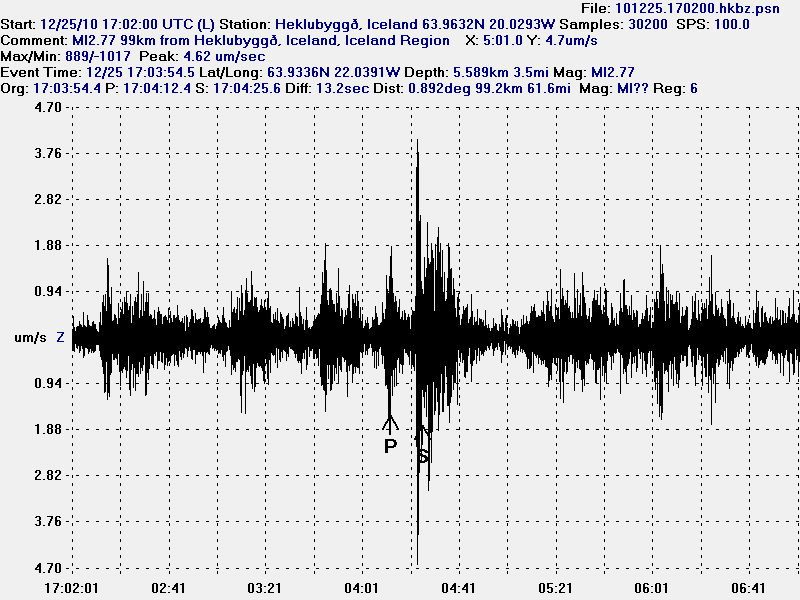
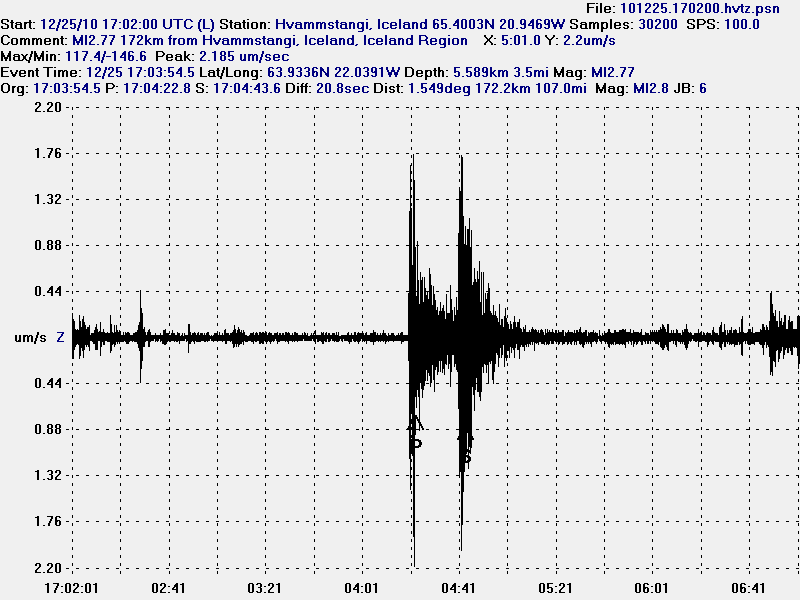
Here are the wave form data of the largest and the second largest earthquakes. There are no location data in this image. As I have not had time to put them into the wave form data.

From Hekubyggð. This is the ML2.8 earthquake.

From Hvammstangi. This is the ML2.8 earthquake. This one is low-pass filtered at 4Hz.

From Hekubyggð. This is the ML2.5 earthquake.

All pictures can be clicked to see the higher resolution of them.